Custard, Amaretto flambé bananas, toasted banana bread soldiers

“A common mistake that people make when trying to design something completely foolproof is to underestimate the ingenuity of complete fools,” Douglas Adams.

I’m not great at desserts. I can do them but I’m better at the savory stuff. And I knew that for our first dinner at Shelley-belly’s Underground, which took pace on the Saturday just gone, I had to wow my guests (or at least, try) with every course – and there were six of them (courses, that is, not guests).

So I chose to do a kind-of deconstructed banana cream pie – I know, boring, right? Everyone is doing some kind of deconstructed dessert at the moment, but it’s because people like them. I mean your standard pie, a Graham Cracker crust with a banana-cream filling topped with whipped cream is okay, it’s fine, it’s good enough. But a little pot of chilled custard served with shortbread fingers for dunking, come on! Way better than a slice of pie. You are in control. You decide. You are the master of your custard to shortbread ratio in every mouthful. The master of the whipped cream, when to have it, when to leave it. The master of the banana, do you eat it all at once? You decide. It’s the perfect dessert.

And banana? Is banana as overdone as deconstructed desserts? I don’t know, I’d hazard a guess that the top selling dessert on any restaurant menu is the banana one, or at least it’s in the top two, I’ll concede that banana might lose out to chocolate occasionally.

So this was the dish: chilled homemade custard, Amaretto flambé bananas, toasted banana bread soldiers, whipped cream, toasted almond flakes. Most of this can be done in advance, at the very least the custard, the banana bread, and the toasted almonds, so the only cooking required while your guests bang their spoons on the table is that of the bananas. Oh, and toasting the banana bread. But if you’d rather skip it, you can serve the same dessert with shortbread biscuits, homemade or not, we don’t judge.

When I first conceptualized this dessert I did it thinking I wanted a set custard, a crème brûlée without the caramel. For this, I turned to Hugh Fearnley-Whittingstall’s River Cottage Everyday and a recipe hidden in those clever pages enticingly dubbed “Foolproof crème brûlée”. The clue is in the name, “Foolproof”, there was no possible way I could mess this up. Except that I did. In fact, it was an unmitigated disaster in three layers. On top, a layer of nearly impenetrable yellow rubber, followed by a layer of very attractive scrambled custard floating prettily on a pond of murky vanilla juice.

To borrow Douglas Adams’ sentiment, if not his exact words, when HFW wrote this recipe for foolproof crème brûlée he clearly hadn’t banked on the likes of me.

To Plan B. A bowl of regular, chilled custard. I stuck with Hugh’s custard recipe, it’s the same basic recipe you’d find in any recipe book really, and the principle was sound (this is not a case of a bad workman blaming the tools, just a case of a bad workman). I made a few idiot-proof adjustments, leaving me with a risk-free dessert.

These quantities gave me enough for around 12 regular portions, or three portions if I was only feeding the custard-loving men in my family. That’s how it is with custard. 
  • 1 litre heavy cream
  • 2 vanilla pods (if you’re feeling vanilla extravagant, otherwise just one)
  • 160 g caster sugar (Use more if you’d prefer your custard a bit sweeter, but go carefully, it is sugar, it is not our friend)
  • 12 medium egg yolks – from the best, free range, organic eggs you can find

Split the vanilla pods down the length and scrape out the seeds. Put the seeds, pods and cream into a saucepan and heat to just below boiling. The cream should quiver a little but not bubble. Remove from the heat and let it stand for a couple of minutes.

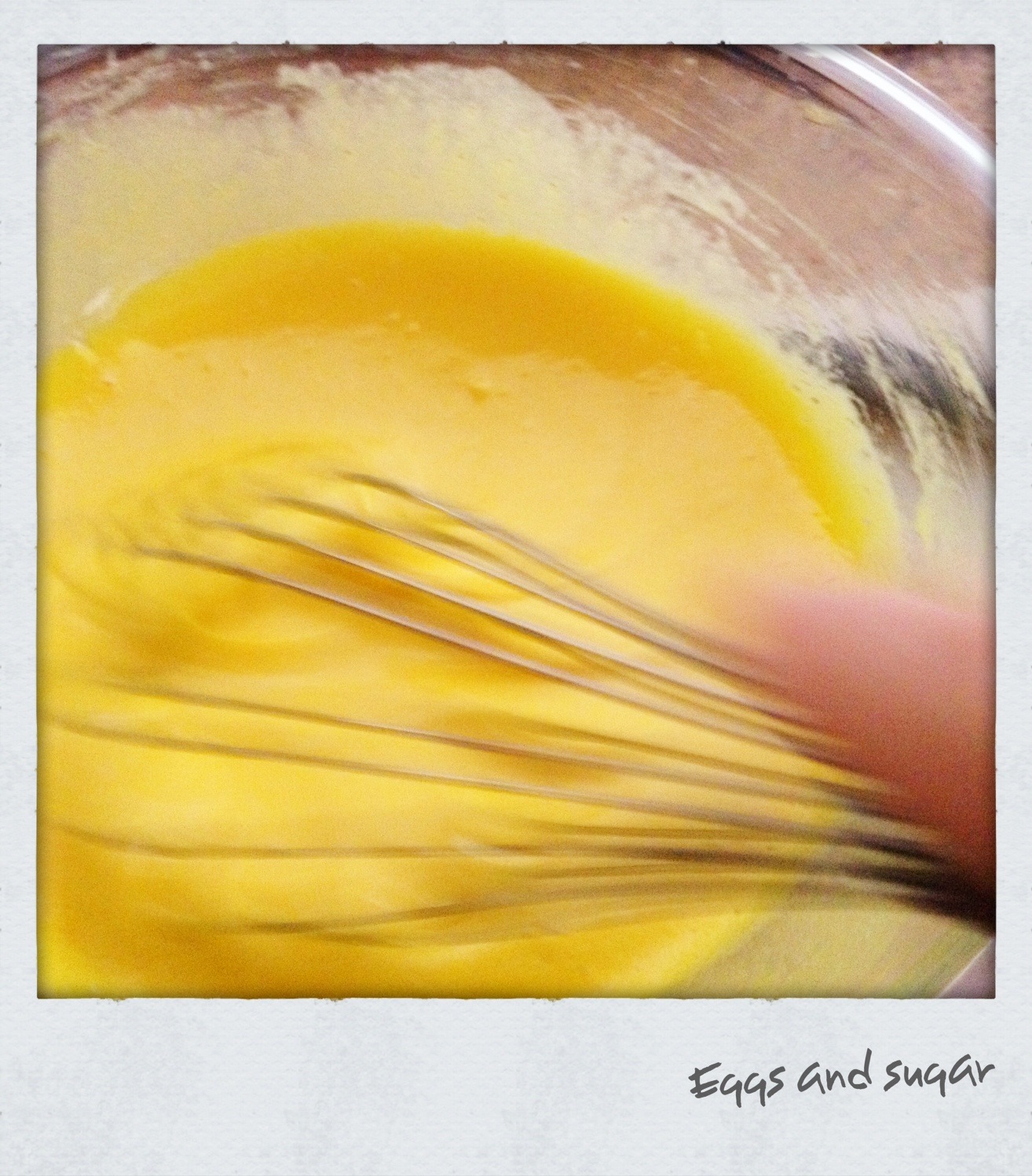
While you’re waiting for the vanilla to flavor the milk, in a bowl big enough to hold all the custard, whisk the caster sugar and egg yolks together – a hand whisk is fine for this but whisk until the yolks are pale. Slowly, really slowly, a little bit at a time, add the hot milk to the egg and sugar mixture, whisking all the time. When all the milk has been added, pour the mixture back into a saucepan and return to a low heat. Keep stirring until the custard has reached the desired thickness, this usually takes six to eight minutes, strain into a clean bowl or jug, cover with cling film (with the film pressed right down to the surface of the custard to prevent a skin from forming) and refrigerate until needed. It will keep in the fridge for a couple of days and can either be served cold or gently reheated on the stove. Don’t refrigerate after reheating, once only.

That’s it, regular vanilla custard. If that’s all you came for you can stop reading now. If you’d like to know about the rest of the dessert, read on.

Banana bread
This makes two loaves – halve the recipe if you wish but I find one loaf is never enough.

  • 170 g butter plus a little extra to grease the loaf tins
  • 450 g all purpose flour
  • 6 teaspoons baking powder
  • 1/2 a teaspoon bicarbonate of soda
  • 1/2 a teaspoon of salt
  • 1/2 a teaspoon grated nutmeg (if you’re not a fan of nutmeg you can leave this out or use cinnamon instead).
  • 4 very ripe large bananas
  • 220 g caster sugar
  • 2 large eggs – from the best, free range, organic eggs you can find
  • I prefer not to use nuts in my banana bread but if you wish you can add about 250 g of chopped or broken walnuts.

Preheat the oven to190 c and prepare two 10 x 20 cm loaf tins (grease and line the base with baking paper).
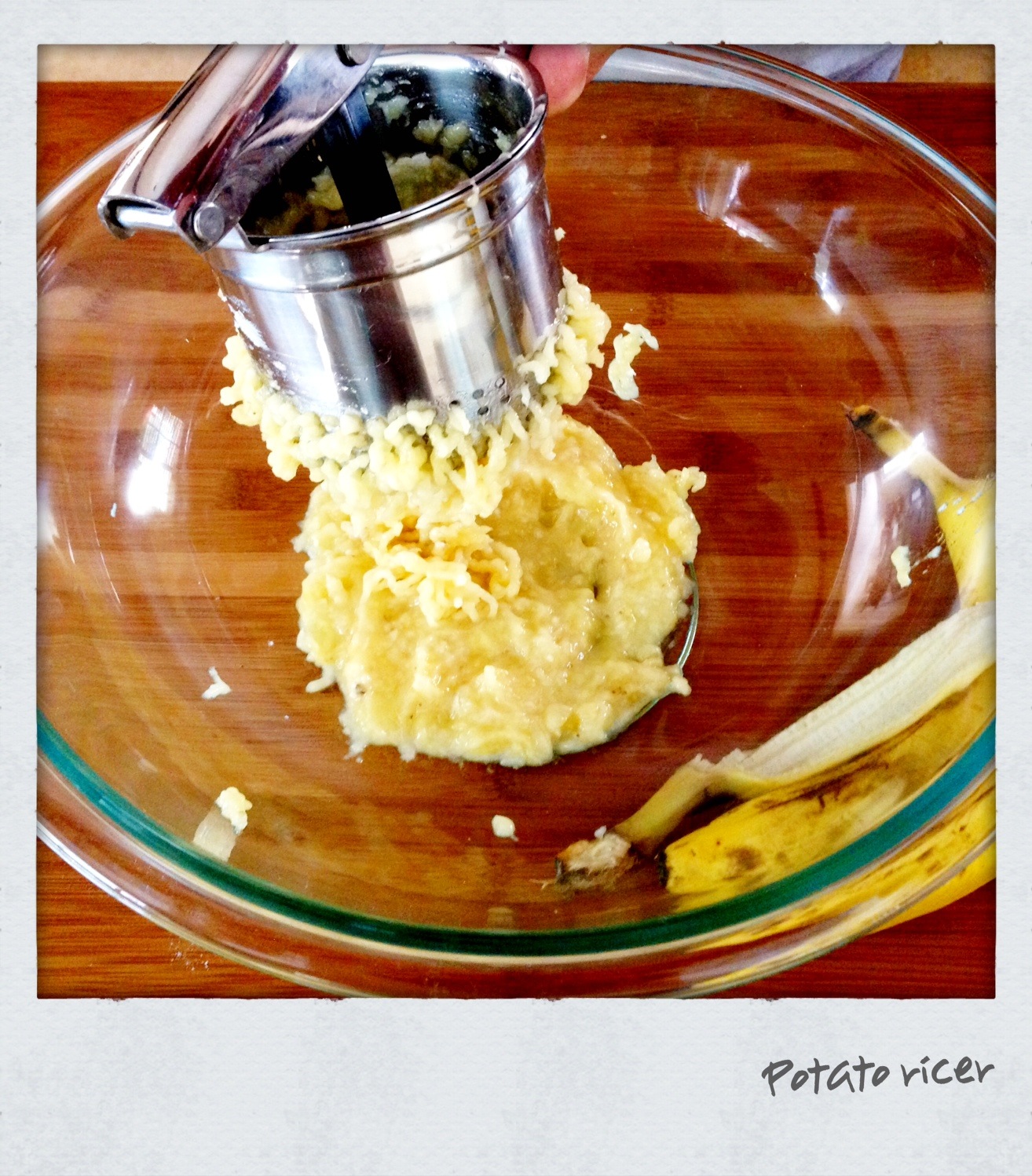
Mash the bananas in a large bowl – I like to use a potato ricer to mash the banana but a fork or potato masher works fine.

Melt the butter on the stove or in the microwave – not hot, just melted – and add it and the sugar and eggs to the banana. Stir together well.
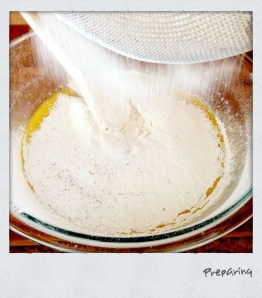
Sift the flour, baking powder, bicarb, salt and nutmeg over the banana

mixture and mix together well. Add the chopped nuts if you’re using them.

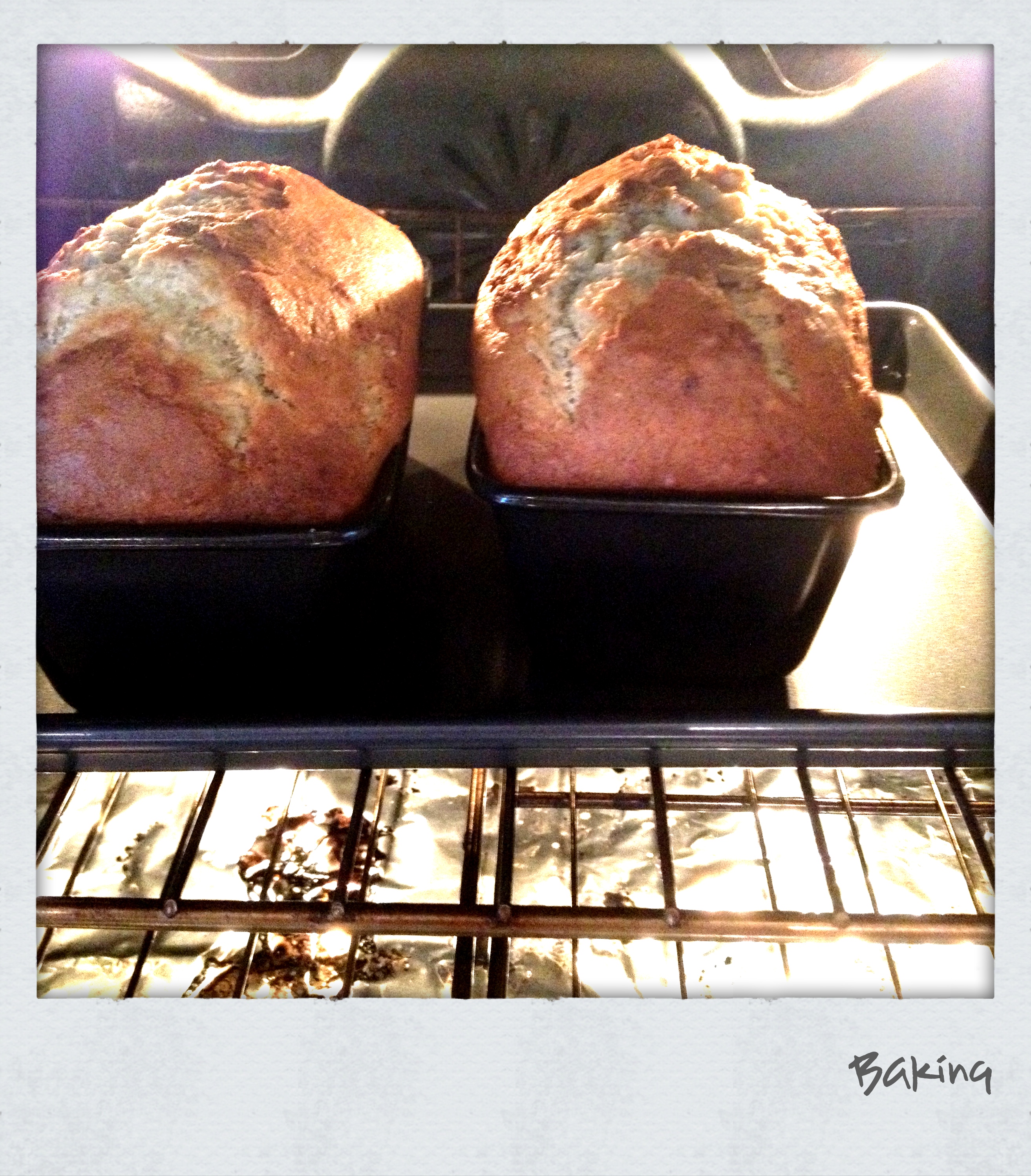
Share the mixture equally between the tins and smooth down the top. Oven temperatures vary, the loaves should bake for between 45 and 55 minutes until a skewer inserted into the centre comes out clean.

Cool in the tin for 15 minutes, remove, cut a slice, top with cold butter and enjoy. Then, cool the rest  completely before wrapping in foil to store.
To plate the dessert you’ll need:

  • Homemade vanilla custard – this can be made the day before.
  • 3 banana bread toast soldiers per person – you can use a store-bought banana loaf but it is really easy to make it yourself. For this dessert it is better if the banana bread is a couple of days old. Toast the soldiers on all four sides under the grill in the oven – watch closely, it will burn quickly due to the high sugar content.
  • whipped cream (not from a can, not ever from a can)
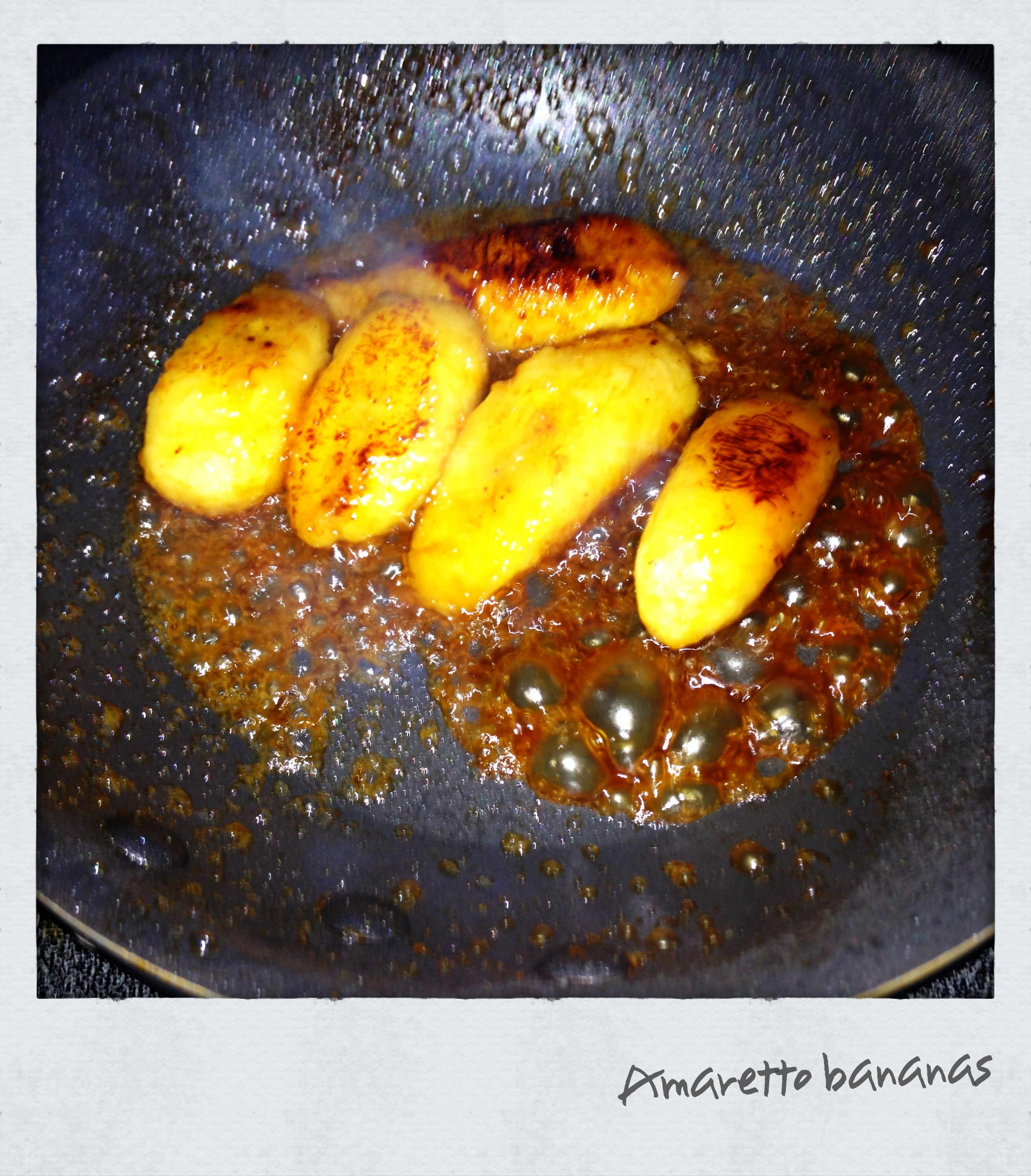
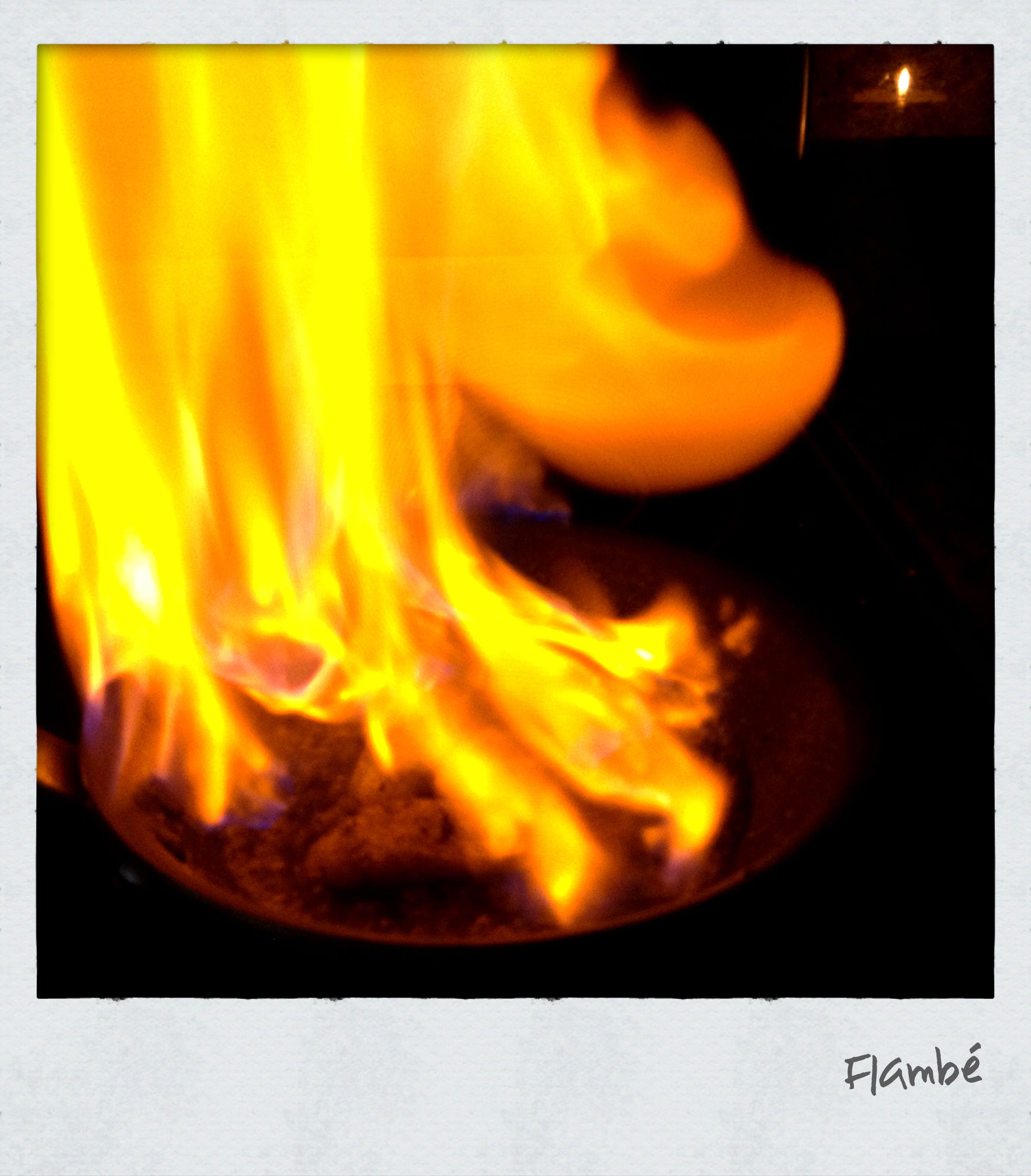
  • 3 or 4 chunks of flambé banana per person – the banana chunks can just be fried in butter but I flambé them in Amaretto at the last minute to give the dish an extra level of flavor and the Amaretto and butter make a great sauce to pour over the bananas. I also add a sprinkle of salt to the bananas while they’re frying. Remember to let them cool a little before serving, hot banana can be lethal. 
  • 1 tablespoon of toasted almond flakes per person (these can be bought toasted but toasting them yourself just takes a few minutes – simply scatter them onto a baking sheet and pop them into an oven preheated to 180c. They’ll take about five minutes to toast to golden brown but check them every minute or so and give the baking sheet a shake).
This post is quite long and wordy, if there’s anything that’s not clear please let me know.

If you’re interested in Hugh Fearnley-Whittingstall’s book, River Cottage Everyday, it is available on Amazon.

Okey dokey artichokey

The thing is, I’m not one to question a cool new thing – if someone tells me this [insert cool new thing here] is the coolest, newest thing, I want it to be. I mean, who doesn’t love a cool new thing? I want to learn about it and then I want to tell my friends about it. Thus making myself cool by association (I am not at all cool but a girl can dream).

So when I spotted the brown-tinged, slightly forlorn looking artichokes labelled “frost kissed” with a label that speaks in the first person, “Frost Kissed™, To Delicious (sic), Once cooked, I transform into a perfect green artichoke with an enhanced, nutty flavor,” I was intrigued. This, I figured, must be the coolest new thing in food today. Then I tried them. 

Things you should know about the Frost Kissed™ Artichokes – first, that “Frost Kissed” is a trade mark. Second, that artichokes become “Frost Kissed” at temperatures below 32º. “The outer layer turns brown, flakes and peels, much like a sunburn.” That reference to scorched human flesh notwithstanding, I decided to give them a whirl.

They were to be a light, post day-at-the-beach supper with a gentle lemon butter sauce and a chilled rosé. I cooked them in the simplest possible way: blanched until just on the too-firm side of cooked, cooled in an ice-bath, drained immediately, removed choke, then back into boiling water for a few minutes at supper time.

While draining and removing the choke I was amazed at the amount of water coming out of them and thought, as you do, that it could not possibly be the fault of the coolest new thing, that I must have overcooked them. When it came to eating, the results were, predictably, disappointing. The leaves were waterlogged and had very little flavor.

I persevered. I knew that the soggy artichoke experience must have been my fault. So on Saturday I headed to the farmers’ market and bought a regular globe artichoke, the kind not kissed by frost and without any of those creepy sunburnt flesh references. I then went to the store and bought a Frost Kissed™, slightly brown artichoke and decided to try again.

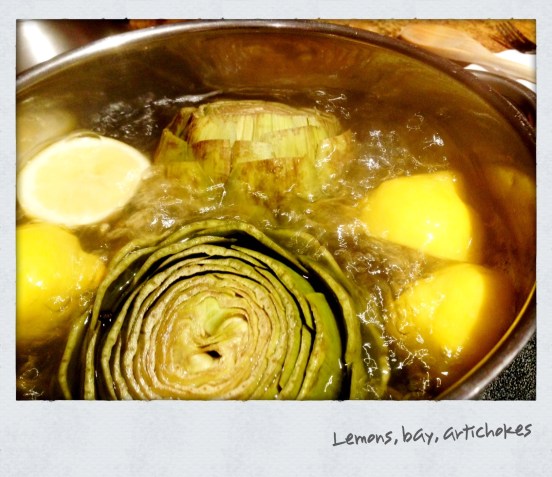
Before cooking I went onto the Frost Kissed™ website to make sure I hadn’t missed a clever cooking trick – their cooking recommendations were pretty similar to what I was doing, the only real difference being that they used plain salted water while I added a couple of lemons, bay leaves and peppercorns to my pot. So I did not alter  my cooking method.

I did, however, stand dutifully over the pot during the whole cooking time, constantly checking the tenderness of my thistles to ensure I didn’t overcook them. The website advises cooking globe artichokes for between 30 and 45 minutes depending on their size. Mine did not take that long. The Frost Kissed™ was ready to come out of the pot after boiling for 18 minutes and the regular one was ready after 24 minutes – the regular was a bit larger but I think the difference in cooking time was more down to the water content of the Frost Kissed™ artichoke.

Again, I cooled them in an ice-bath and drained them upside down. Again, the quantity of water that came out of the Frost Kissed™ artichoke was astonishing compared with what came out of the other.

I have a friend who says, “The proof of the pudding is on the wall,” and I think in this case that mixed metaphor might apply. The texture of the regular artichoke was far better than the Frost Kissed™ and the taste was, well… artichokey. The flavor of the Frost Kissed™, however, was a bit more intense than the regular globe – and perhaps I had overcooked the first one a bit and diluted the flavor.

Given the choice, which would I choose? I preferred the regular artichoke and, barring an intense artichoke craving (I haven’t had one yet, but I hear they happen), I don’t think I’d rush to buy the Frost Kissed™ again.

I like the idea though, that farmers and supermarkets are finding a place for produce damaged by less than perfect weather and urge you to give the Frost Kissed™ variety a go. I don’t think the supermarket or the producer is trying to dupe anyone into buying an inferior product, it’s still pretty good and they’re not calling it “the coolest new thing in food” with a matching price tag. The Frost Kissed™ and the regular artichokes were both priced at two for $5. Perhaps my cooking method was wrong, maybe these artichokes would do better if roasted in foil with a drizzle of olive oil, thus eliminating the addition of water to an already watery product. Maybe next Frost Kissed™ season I’ll give that a go. Or if you give them a go, please let me know the results.

Visit Ocean Mist for more information about Frost Kissed™ artichokes. Even if you don’t want to know more about Frost Kissed™ artichokes their website is worth a few minutes of your time, they have loads of other artichoke information on there.

Bacon gold – the future of mayonnaise

“When you wake up in the morning, Pooh,” said Piglet at last, “what’s the first thing you say to yourself?”

“What’s for breakfast?” said Pooh. “What do you say, Piglet?”

“I say, I wonder what’s going to happen exciting today?” said Piglet.

Pooh nodded thoughtfully, “It’s the same thing,” he said.

Let’s pretend for a moment that Piglet is not made out of bacon and focus on the fact that breakfast, the very existence of breakfast, amounts to an exciting day.

This week it is all about the bacon. A love of bacon. That porky, salty, sometimes crispy, sometimes fatty, most perfect of all the meats. Bacon. Actually, it’s about bacon fat.

I’m not here to tell you how to cook bacon, I am going to tell you how not to cook it, then I’m going to tell you how not to waste the bacon gold. First, buy good bacon. Buy good bacon or don’t bother. If you’re buying pre-packaged bacon make sure you read the ingredients on the packet before putting it into your shopping cart. If “water” or “water added” appears anywhere on the packaging just put it down and walk away. This is not bacon, it is something else. I don’t know what it is, but it’s not bacon.

Second, don’t throw cold bacon into a screaming hot pan. Third, don’t throw cold bacon into a screaming hot pan to which you may have added any kind of fat – olive oil, canola oil, butter, whatever – you don’t need it.

Remove the bacon from the fridge about 10-15 minutes before you’re ready to cook it. Heat your good frying-pan to a moderate/high heat, add the bacon in a single layer (bacon that overlaps does not cook) and cook it slowly, rendering as much fat out of the bacon as possible – this may mean turning the heat down a bit. If you’re cooking lardons or bacon cubes the rendering process will take longer than if you’re cooking slices of bacon, but it is all worth the wait. I can’t tell you how long it will take, it really depends on how thick your bacon is, but it’s not quick (okay, so apparently I am going to tell you how to cook bacon).

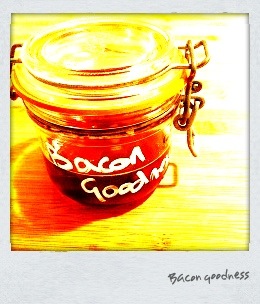
Five or six paragraphs in and I’m finally at the point of this post: bacon fat or, more accurately, liquid, edible, bacon gold. Soon after cooking, so before the fat has a chance to thicken or set, strain into a fridge-suitable container. I line my tea strainer with a bit of cheese cloth and strain the fat into a clean glass jar – this leaves you with a rich, golden, bit-free liquid. Label it and refrigerate until you’re ready to make one of the following…

  • bacon mayo
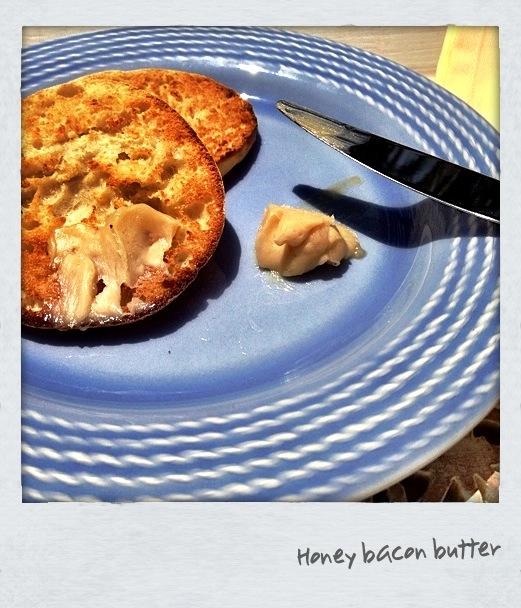
  • whipped bacon honey butter (oh yes, that is a thing and it is awesome)
  • bacon caramel popcorn or just bacon popcorn or bacon chilli popcorn
  • Just about any veggies – collard greens, savoy cabbage, kale (or any greens really) cooked low and slow,
  • asparagus or brussels sprouts simply blanched then sautéed in bacon fat
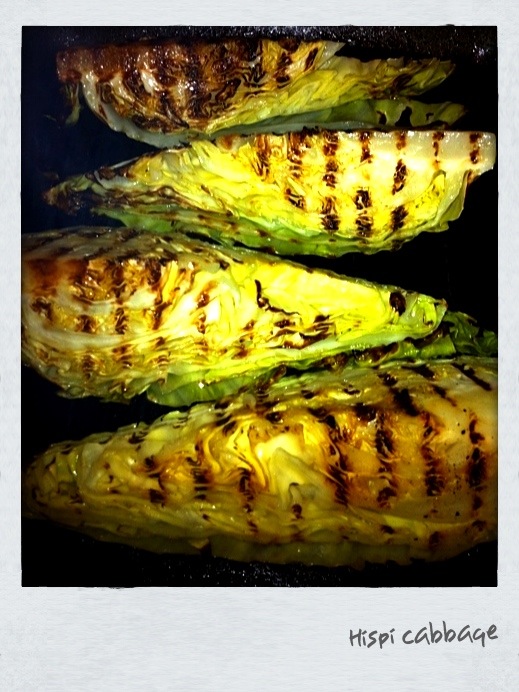
  • wedges of hispi cabbage brushed in smokey bacon fat at grilled on the BBQ
  • roast potatoes
  • confit tomatoes
  • sautéed apples or pears for roast pork
  • serve it as a starter, warm and runny with some good bread for dipping

Really, the possibilities are endless, however I’m not going to bore you with the endless possibilities in this post. Today I’m just going to do the bacon mayo and in future posts I’ll show you some of the others if you’re interested. If there’s anything on this list you’re really eager to try and would like a recipe for, please get in touch and I’ll be happy to send it to you.

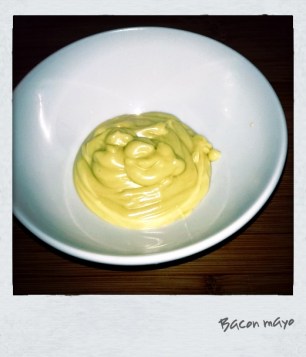
Okay, bacon mayonnaise. The future of mayonnaise. I don’t know why it’s not all bacon mayo all the time. Seriously, this stuff is awesome… on a burger, on a BLT, as part of a salad dressing (not for any kind of healthy salad, of course), on a fish-finger sandwich… a couple of nights ago we had seared, lightly seasoned mahi mahi with a dollop of bacon mayo – delicious!

  • 125 ml strained, liquid bacon fat (if it has come straight out of the fridge pop the jar into some warm water to melt the fat – it must be room temperature)
  • 125 ml oil – I wouldn’t use olive oil for this as it can be very strong. Grape seed is a good option but canola, veg or sunflower will also work
  • 3 medium egg yolks – from the best, free range, organic eggs you can find
  • juice of 1/2 a lemon
  • salt to taste – you may not need this as the bacon fat is sometimes salty enough
  • cayenne pepper, freshly cracked black pepper, chilli flakes – these are an optional garnishes, choose something that matches your dish or leave them out altogether.
  • Cold water – this is not always necessary but if your mayo looks too thick add a bit of water a teaspoon at a time.

In a blender or with a whisk, beat your egg yolks well – a blender is quick and easy to use but after making mayonnaise the old fashioned way you really feel like you’ve earned it. With the blender motor running or with your whisk arm working as fast as it can go, slowly start adding your oil a little at a time. When you’ve added all the oil, do the same with the bacon fat. Once the egg, oil and bacon fat have formed a thick emulsion add the lemon juice and salt if required. Keep the water handy in case you need to thin out the mayonnaise.

If you do none of these things, if you never save your bacon fat, never use it to make popcorn or let its silken goodness drip into the crevasses of a toasted English muffin, never coat potatoes before roasting or BBQ hispi cabbage wedges coated in bacon fat, if none of these things appeals to you, that’s okay. I ask that you just do this one thing – please don’t tip your bacon fat, or any fat, down the sink.

If you think you deserve a treat: So, you’re on your way home and you’ve had a really hard day – I don’t mean a ‘meh’ day, a so-so day, I mean a hard day – stop and buy a good, crusty loaf of bread. When you get home, and preferably when no one is around to witness this heart stopping (literally, heart stopping) act, rip a chunk of bread off your new loaf, dip a clean knife into your jar of saved bacon fat and smear it onto a piece of fresh bread, add a sprinkle of Maldon salt, close your eyes and enjoy.

If you think you deserve a treat and you’re in Brooklyn, New York: Even if you’re not in Brooklyn, if you’re somewhere else and you think you deserve a treat, go to Brooklyn. For the handsome sum of $4, Fatty Cue in Brooklyn will serve you a dish called Dragon Pullman Toast with a side of master fat. Dragon Pullman toast, I think so named for the Chinatown Bakery that provides the bread, is just thick slices of slightly sweet toasted bread. The master fat is, I think, the expertly strained fat left after smoking and roasting endless pork shoulders and pork bellies. Put it on your list.

WARNING – while all of the above dishes are good for the soul, none of them are good for the body. Please exercise moderation.