Much is being said about white Bolognese, a meat sauce made using veal, pork and milk, cooked low and slow and served on fat ribbons of beautiful, silky pasta.
I’m a big fan of a rich, beefy Bolognese, flecked with orange and green soffritto and glistening with a layer of orange oil. With that as my comfort zone, it was hard to get my head around a ‘white Bolognese’ but I did, and these are the results.
There didn’t seem to be a consensus on the rights and wrongs of white Bolognese in the few recipes I found so this is what I’ve cobbled together using the bits I liked from John DeLucie’s recipe (chef/owner of The Lion and Crown in NYC and also the guy who’s bringing sexy white Bolognese back) and Marcella Hazan’s basic Bolognese principles, with one exception – she advocates cooking meat in milk before adding wine as this “protects it from the acidic bite” of the wine. I definitely do not know better than that Doyen of all things Italian food but in this instance I chose, cavalierly perhaps, to skip her advice and just do it my own way.
This dish is rich and elegant – I served it as a ‘primi’ followed by grilled fish and salad but it could very easily have been the main event.
Ingredients you’ll need
- Basic aromatics (but no carrot, I wanted the colour to remain as neutral as possible – you don’t have to use these, really whatever aromatics you like will work)
- 2 medium leeks (white part only)
- 4 celery stalks
- 1 medium fennel bulb
- 1 medium onion
- 5 garlic cloves
- 1/2 kg of ground pork
- 1/2 kg of ground veal
- 750 ml white wine (or a bit more) at room temp
- 750 ml very light chicken stock (warm slightly in a pan on the stove before using)
- 500 ml cream
- 3 table spoons duck fat (or a lightly flavoured olive oil)
- 2 table spoons chopped thyme
- 2 table spoons chopped sage
- 2 table spoons chopped parsley
- Freshly ground white pepper
- Salt
- Pasta (I used pappardelle. this recipe makes enough for about 4 hungry people so choose your pasta quantity accordingly)
- A block of Parmesan cheese – let your guests grate their own
Ingredient notes and alternatives:
Aromatics – all chopped to a similar sized dice, not more than half a cm
Meat – I used a 50/50 veal to pork ratio but you can adjust to suit your palate and your pocket
Stock – I used homemade chicken stock with very little seasoning or colour – I did not want an enhanced chickeny flavour or any of the colour so often imparted from stock cubes
Cream – I think full fat milk will work too, I only had fat free, which I don’t believe will work, so I used cream instead
Duck fat – If you haven’t recently confit some duck legs and don’t happen to have a couple of table spoons of duck fat knocking around, buy a can. I didn’t think the duck fat was an essential element until I started cooking but as soon as I smelled those ducky notes floating through the kitchen I changed my mind – it adds a whole new level of flavour and aroma to the dish
Pepper – black pepper has a more pronounced pepperiness than white. I thought white lent itself more to the subtlety of the flavours, but mostly I chose white pepper because it was aesthetically pleasing to me. Pepper lovers may want to add freshly ground black pepper when the dish is served.
Pasta – should the pasta be homemade? If you have the time, make it, it’s fun and rewarding. If there are more pressing things to do with your time while you wait four hours for sauce to cook, go do them. Pasta from a box will be good too.
How to do it
- Heat your duck fat (or olive oil) in the best pot you’ve got – something roomy with a heavy base for even heat distribution. Add the meat and cook gently until cooked through – do not brown the meat!
- When cooked, put the meat into a sieve and drain out all the liquid. Pour the strained liquid back into the pot (thank you John DeLucie for this very cheffy tip) and return to the heat – low to medium, you do not want to colour your veggies. Tip in your diced veggies, season with salt and freshly ground white pepper, stir, cover with a parchment lid (or don’t, up to you) and sweat for about ten minutes. Add the thyme and continue to sweat for another five-ish minutes until the vegetables are soft and translucent.
- Stir in the cooked meat.
- Add the room-temperature wine and allow to reduce at the lowest, gentlest possible simmer until the pan is almost dry.
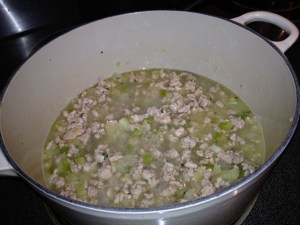 Simmering
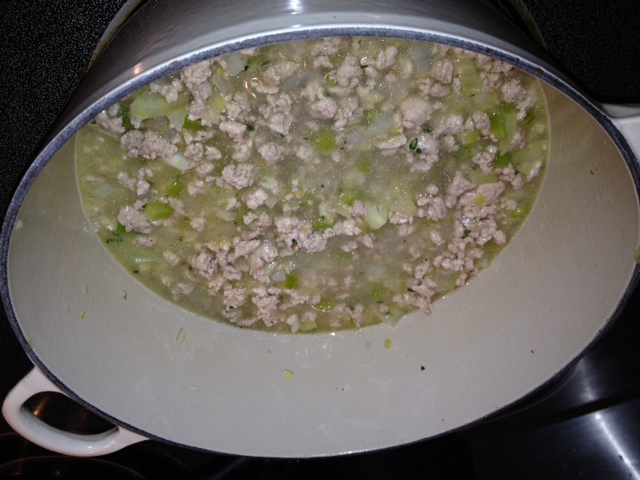
- Add the warm stock and repeat the previous step until the pan is nearly dry. Reducing the wine and the stock at a low simmer can take up to three hours. Set an alarm and check it every 15 minutes or so. Don’t let it boil and don’t let it stick to the pan. Again, a parchment lid comes in handy here.
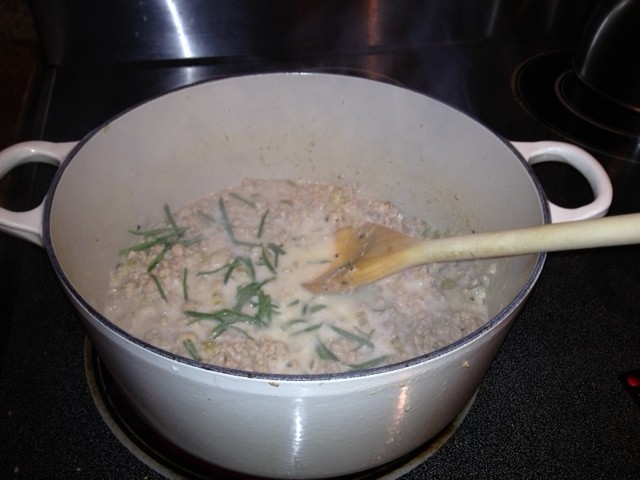
- If you are preparing this early to be eaten later you can stop here and continue about half an hour before you want to eat. Bring the meat sauce up to temperature slowly before adding your cream.Add the cream, not fridge cold. I put the sage and cream into a pot on a low heat to infuse for a few minutes before adding it to the meat. Reduce until thick.
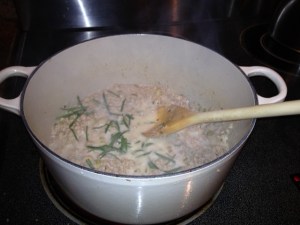 Cream
Cream
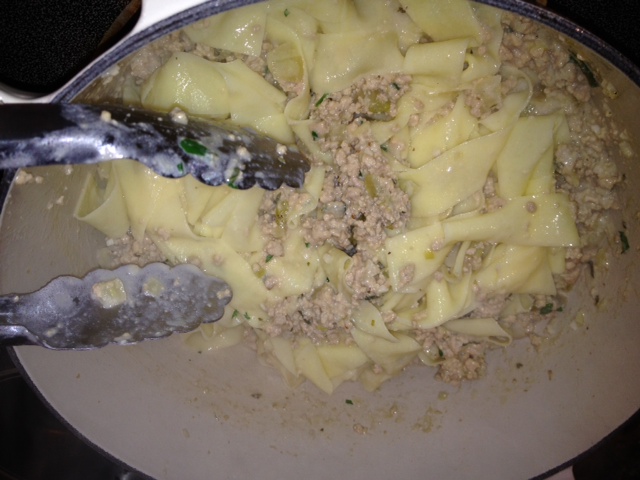
- Prepare your pasta, drain and add it to your meat sauce. Reserve some of the pasta water in case your sauce consistency is not exactly as you’d like it.
 Nearly there
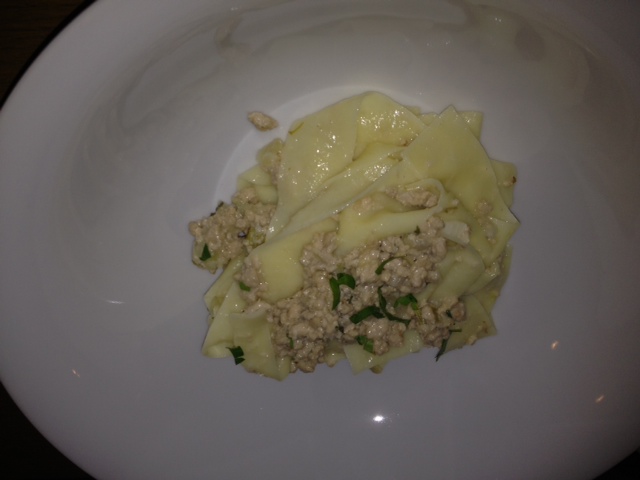
- Serve in hot bowls with a block of Parmesan.
 Ready
Ready


 Shelley-belly Blogs