“A common mistake that people make when trying to design something completely foolproof is to underestimate the ingenuity of complete fools,” Douglas Adams.
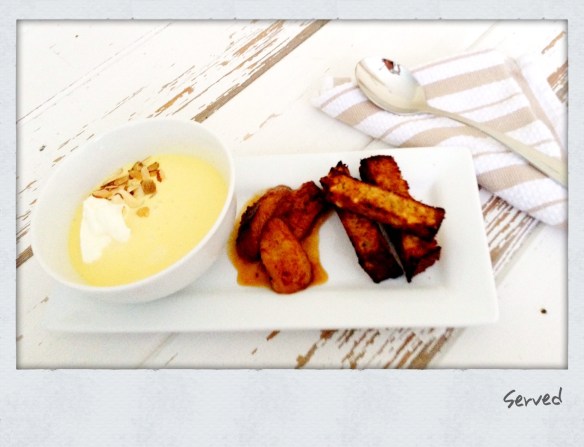
I’m not great at desserts. I can do them but I’m better at the savory stuff. And I knew that for our first dinner at Shelley-belly’s Underground, which took pace on the Saturday just gone, I had to wow my guests (or at least, try) with every course – and there were six of them (courses, that is, not guests).
So I chose to do a kind-of deconstructed banana cream pie – I know, boring, right? Everyone is doing some kind of deconstructed dessert at the moment, but it’s because people like them. I mean your standard pie, a Graham Cracker crust with a banana-cream filling topped with whipped cream is okay, it’s fine, it’s good enough. But a little pot of chilled custard served with shortbread fingers for dunking, come on! Way better than a slice of pie. You are in control. You decide. You are the master of your custard to shortbread ratio in every mouthful. The master of the whipped cream, when to have it, when to leave it. The master of the banana, do you eat it all at once? You decide. It’s the perfect dessert.
And banana? Is banana as overdone as deconstructed desserts? I don’t know, I’d hazard a guess that the top selling dessert on any restaurant menu is the banana one, or at least it’s in the top two, I’ll concede that banana might lose out to chocolate occasionally.
So this was the dish: chilled homemade custard, Amaretto flambé bananas, toasted banana bread soldiers, whipped cream, toasted almond flakes. Most of this can be done in advance, at the very least the custard, the banana bread, and the toasted almonds, so the only cooking required while your guests bang their spoons on the table is that of the bananas. Oh, and toasting the banana bread. But if you’d rather skip it, you can serve the same dessert with shortbread biscuits, homemade or not, we don’t judge.
When I first conceptualized this dessert I did it thinking I wanted a set custard, a crème brûlée without the caramel. For this, I turned to Hugh Fearnley-Whittingstall’s River Cottage Everyday and a recipe hidden in those clever pages enticingly dubbed “Foolproof crème brûlée”. The clue is in the name, “Foolproof”, there was no possible way I could mess this up. Except that I did. In fact, it was an unmitigated disaster in three layers. On top, a layer of nearly impenetrable yellow rubber, followed by a layer of very attractive scrambled custard floating prettily on a pond of murky vanilla juice.
To borrow Douglas Adams’ sentiment, if not his exact words, when HFW wrote this recipe for foolproof crème brûlée he clearly hadn’t banked on the likes of me.
To Plan B. A bowl of regular, chilled custard. I stuck with Hugh’s custard recipe, it’s the same basic recipe you’d find in any recipe book really, and the principle was sound (this is not a case of a bad workman blaming the tools, just a case of a bad workman). I made a few idiot-proof adjustments, leaving me with a risk-free dessert.
These quantities gave me enough for around 12 regular portions, or three portions if I was only feeding the custard-loving men in my family. That’s how it is with custard. 
- 1 litre heavy cream
- 2 vanilla pods (if you’re feeling vanilla extravagant, otherwise just one)
- 160 g caster sugar (Use more if you’d prefer your custard a bit sweeter, but go carefully, it is sugar, it is not our friend)
- 12 medium egg yolks – from the best, free range, organic eggs you can find
Split the vanilla pods down the length and scrape out the seeds. Put the seeds, pods and cream into a saucepan and heat to just below boiling. The cream should quiver a little but not bubble. Remove from the heat and let it stand for a couple of minutes.
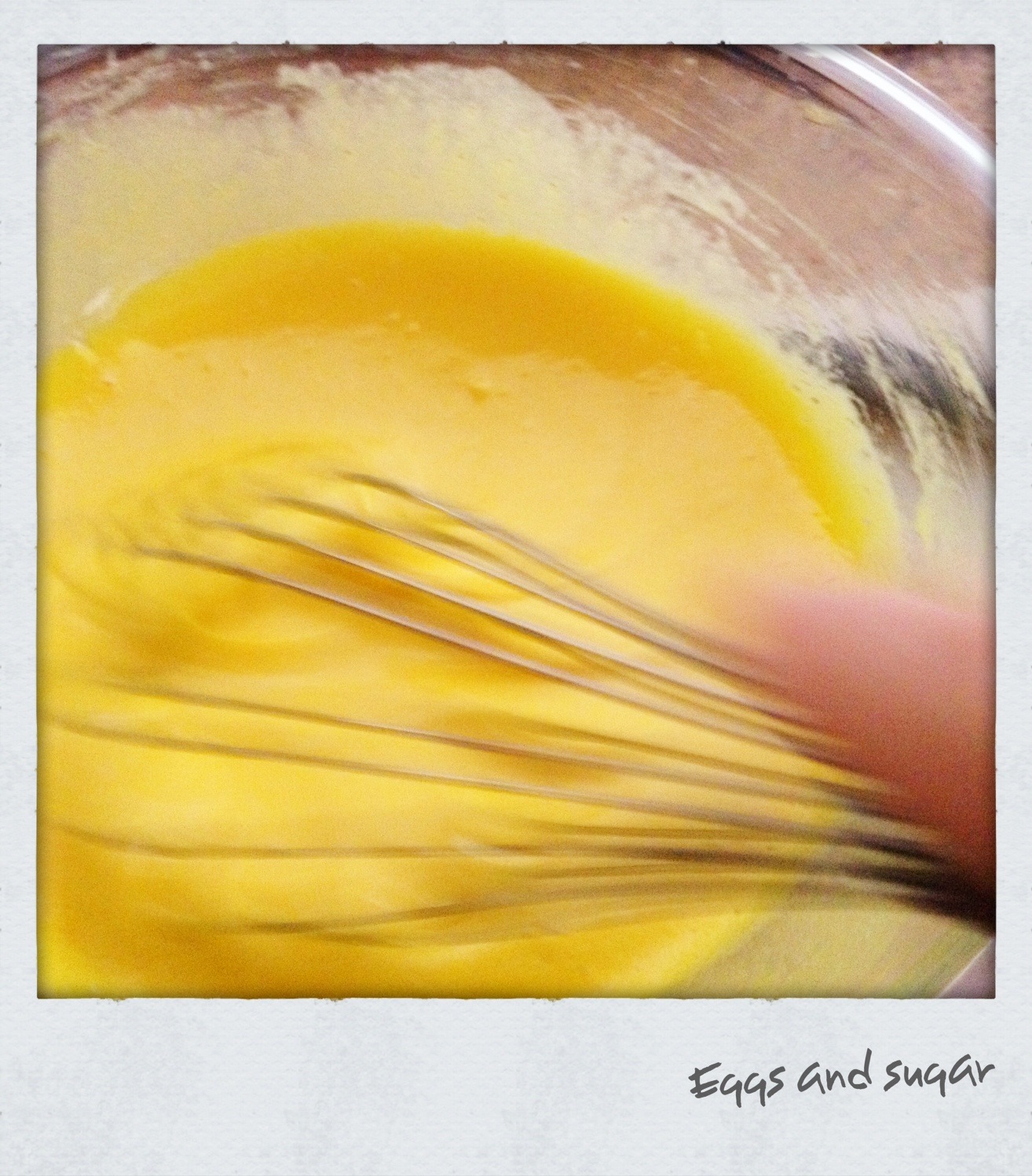
While you’re waiting for the vanilla to flavor the milk, in a bowl big enough to hold all the custard, whisk the caster sugar and egg yolks together – a hand whisk is fine for this but whisk until the yolks are pale. Slowly, really slowly, a little bit at a time, add the hot milk to the egg and sugar mixture, whisking all the time. When all the milk has been added, pour the mixture back into a saucepan and return to a low heat. Keep stirring until the custard has reached the desired thickness, this usually takes six to eight minutes, strain into a clean bowl or jug, cover with cling film (with the film pressed right down to the surface of the custard to prevent a skin from forming) and refrigerate until needed. It will keep in the fridge for a couple of days and can either be served cold or gently reheated on the stove. Don’t refrigerate after reheating, once only.
That’s it, regular vanilla custard. If that’s all you came for you can stop reading now. If you’d like to know about the rest of the dessert, read on.
Banana bread
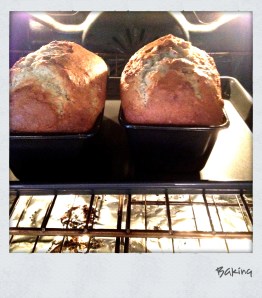 This makes two loaves – halve the recipe if you wish but I find one loaf is never enough.
- 170 g butter plus a little extra to grease the loaf tins
- 450 g all purpose flour
- 6 teaspoons baking powder
- 1/2 a teaspoon bicarbonate of soda
- 1/2 a teaspoon of salt
- 1/2 a teaspoon grated nutmeg (if you’re not a fan of nutmeg you can leave this out or use cinnamon instead).
- 4 very ripe large bananas
- 220 g caster sugar
- 2 large eggs – from the best, free range, organic eggs you can find
- I prefer not to use nuts in my banana bread but if you wish you can add about 250 g of chopped or broken walnuts.
Preheat the oven to190 c and prepare two 10 x 20 cm loaf tins (grease and line the base with baking paper).
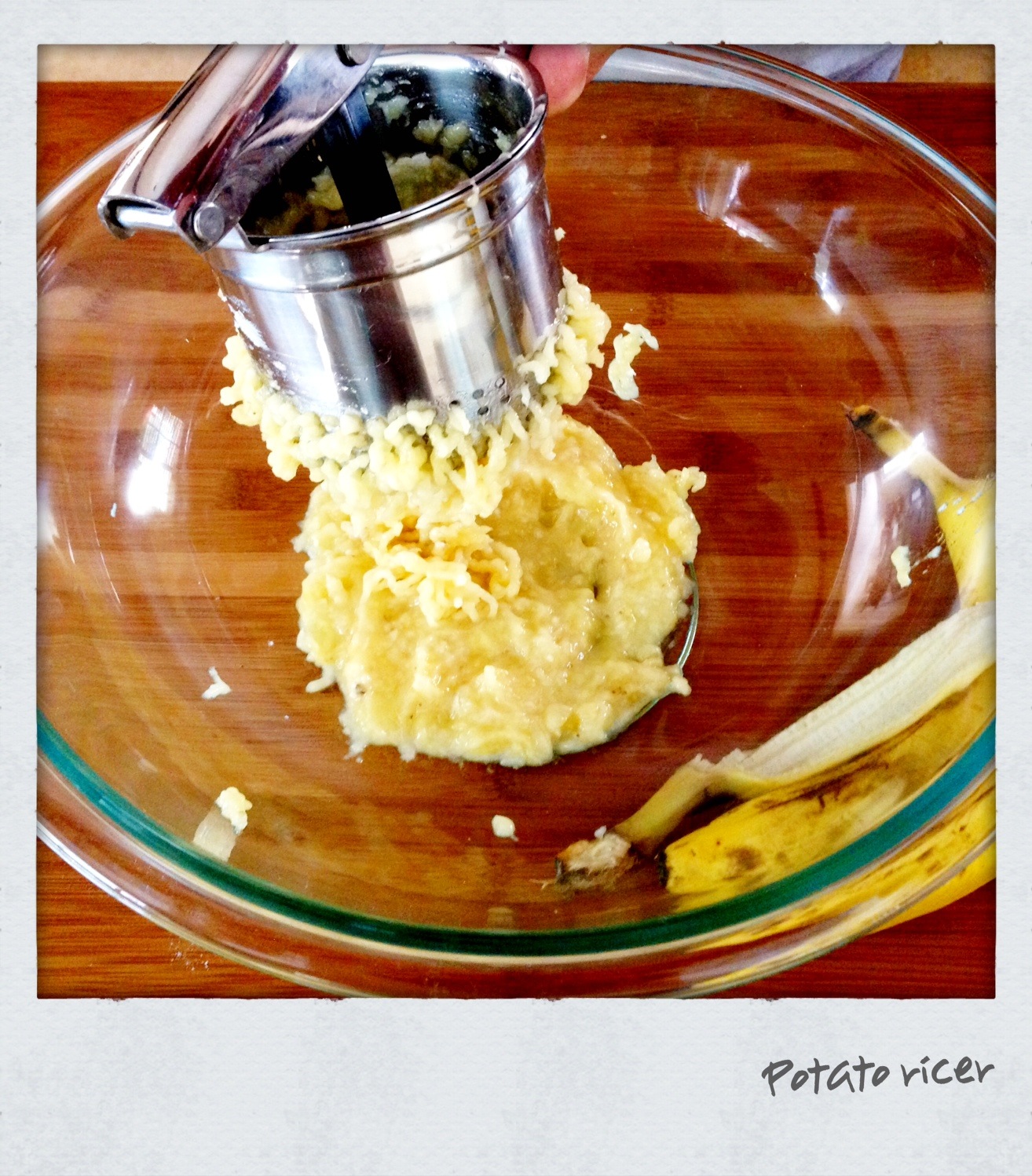
 Mash the bananas in a large bowl – I like to use a potato ricer to mash the banana but a fork or potato masher works fine.
Melt the butter on the stove or in the microwave – not hot, just melted – and add it and the sugar and eggs to the banana. Stir together well.
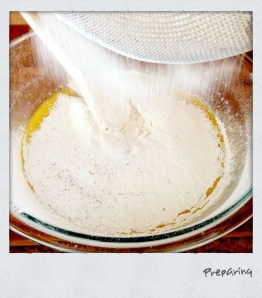
Sift the flour, baking powder, bicarb, salt and nutmeg over the banana
mixture and mix together well. Add the chopped nuts if you’re using them.
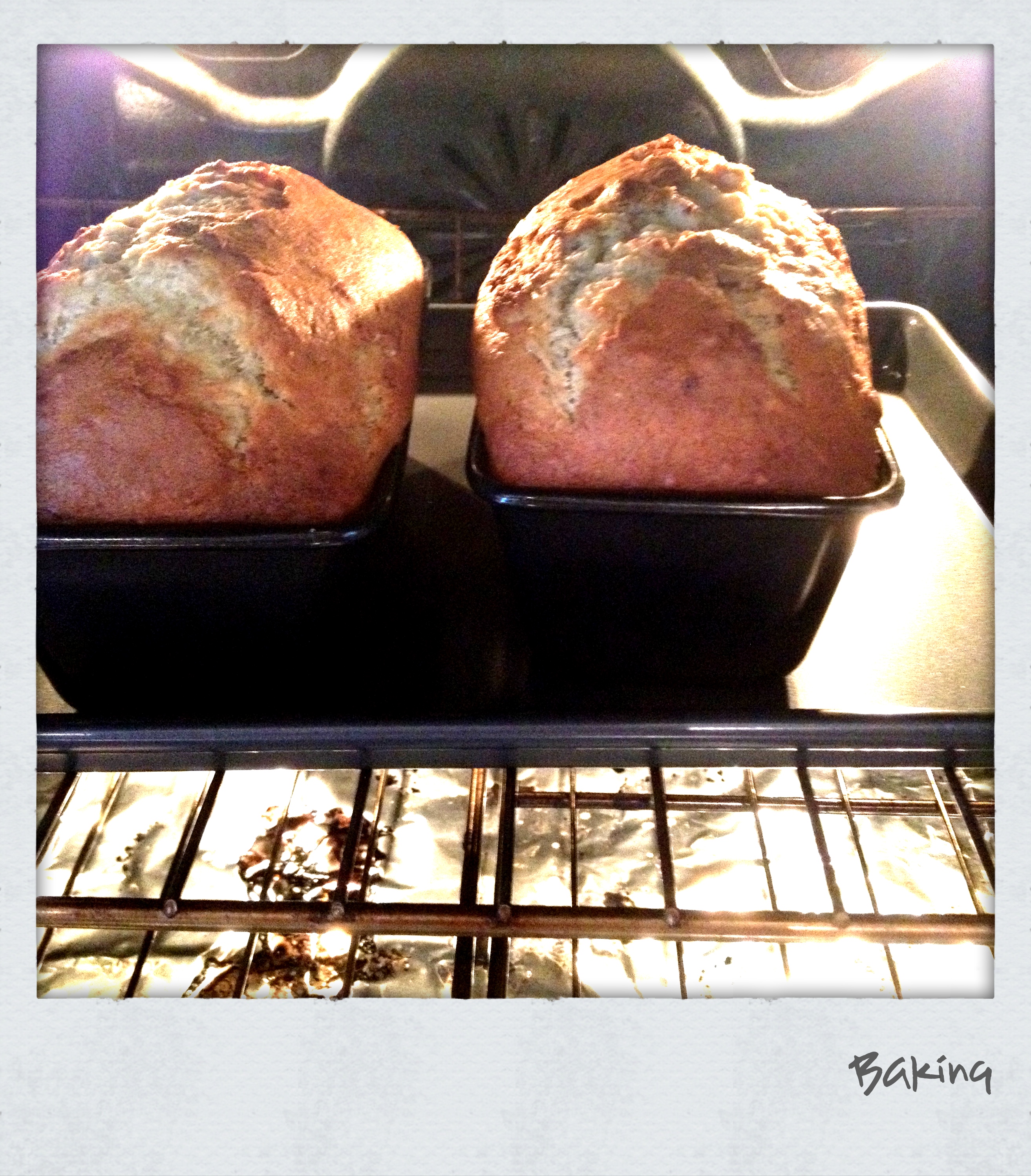
Share the mixture equally between the tins and smooth down the top. Oven temperatures vary, the loaves should bake for between 45 and 55 minutes until a skewer inserted into the centre comes out clean.
Cool in the tin for 15 minutes, remove, cut a slice, top with cold butter and enjoy. Then, cool the rest completely before wrapping in foil to store.
 To plate the dessert you’ll need:
- Homemade vanilla custard – this can be made the day before.
- 3 banana bread toast soldiers per person – you can use a store-bought banana loaf but it is really easy to make it yourself. For this dessert it is better if the banana bread is a couple of days old. Toast the soldiers on all four sides under the grill in the oven – watch closely, it will burn quickly due to the high sugar content.
- whipped cream (not from a can, not ever from a can)
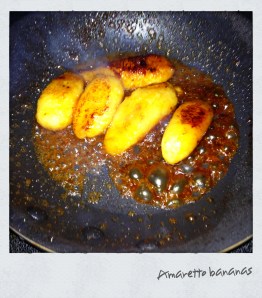
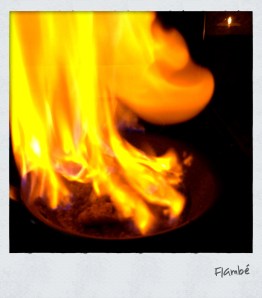
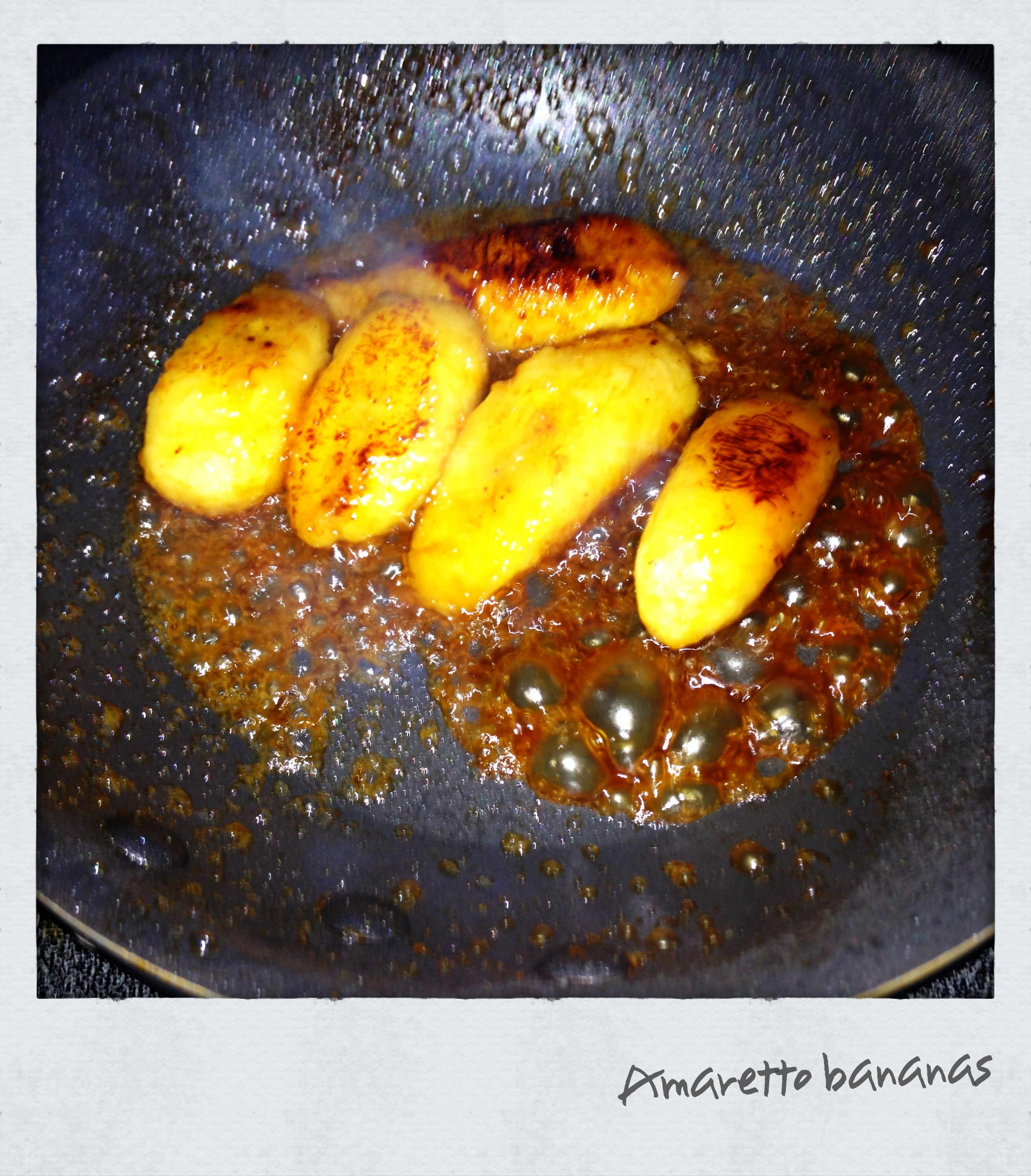
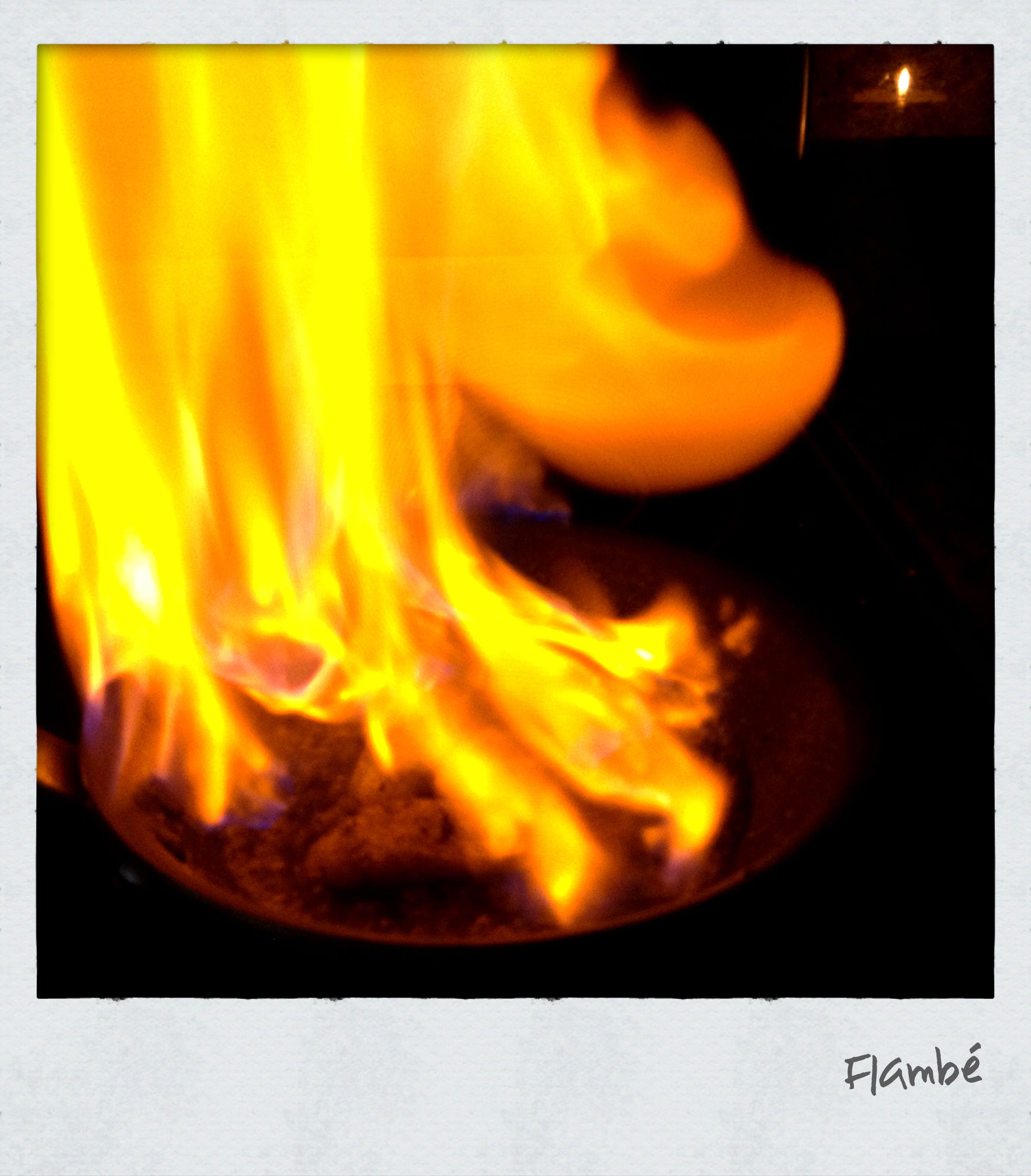
- 3 or 4 chunks of flambé banana per person – the banana chunks can just be fried in butter but I flambé them in Amaretto at the last minute to give the dish an extra level of flavor and the Amaretto and butter make a great sauce to pour over the bananas. I also add a sprinkle of salt to the bananas while they’re frying. Remember to let them cool a little before serving, hot banana can be lethal.
- 1 tablespoon of toasted almond flakes per person (these can be bought toasted but toasting them yourself just takes a few minutes – simply scatter them onto a baking sheet and pop them into an oven preheated to 180c. They’ll take about five minutes to toast to golden brown but check them every minute or so and give the baking sheet a shake).
This post is quite long and wordy, if there’s anything that’s not clear please let me know.
If you’re interested in Hugh Fearnley-Whittingstall’s book, River Cottage Everyday, it is available on Amazon.
 Genius! Well, maybe not exactly “genius” but pretty smart.




 Shelley-belly Blogs