I love clams!

This is delicious. And easy. And versatile. I know the recipe looks long but this is because I’m a bit wordy today – it’s really quite quick.

Chickpeas are very much de rigueur at the moment – really inexpensive and irritatingly good for you.
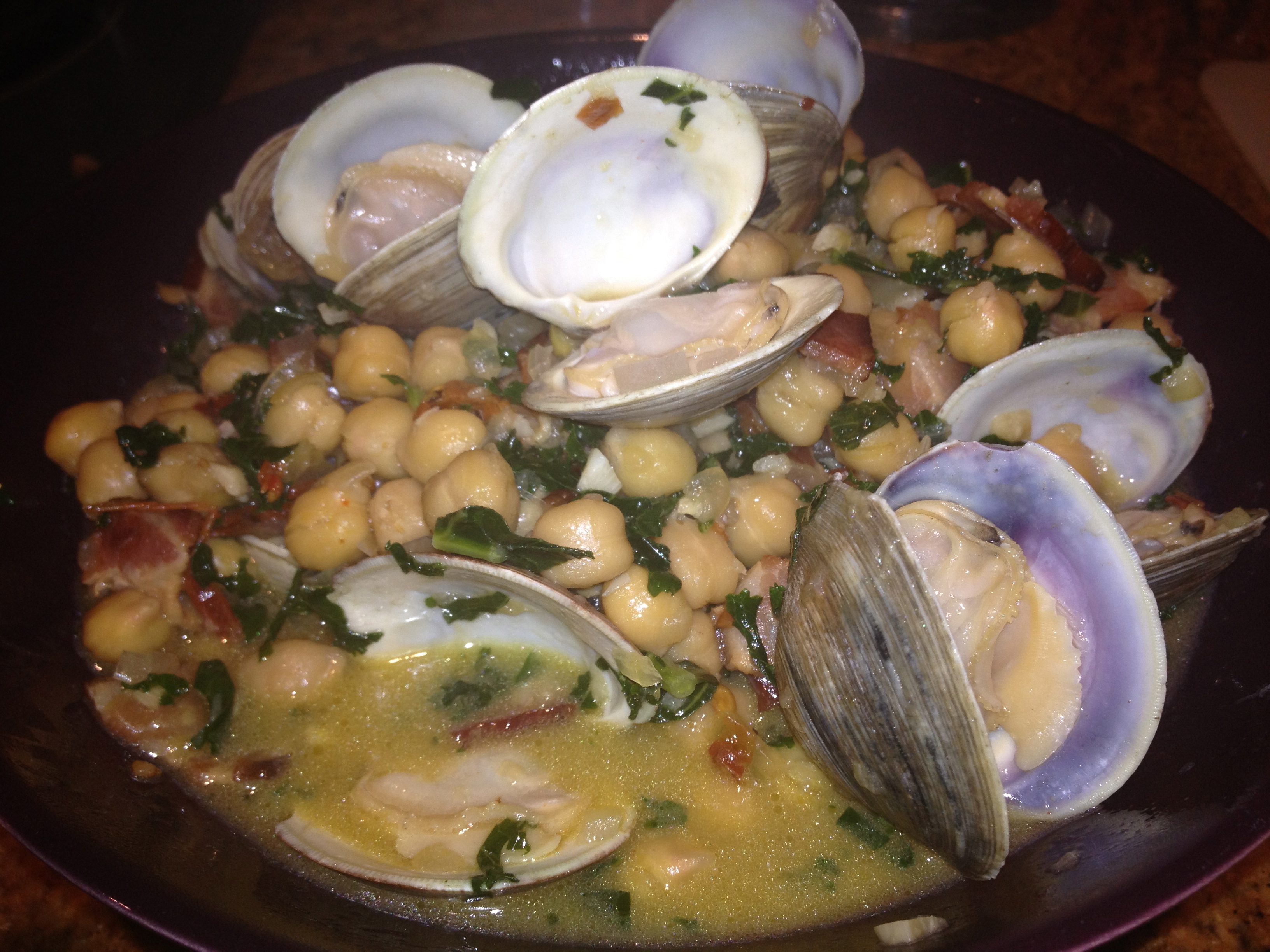
So this is a little chickpea something something. Barrafina in Soho in London had a similar offering on its menu last summer (not sure if it is still there) – more as a side dish and without the chilli but the idea is the same. This works as a starter or main course in a number of guises – skip the clams and serve as a side with just about anything from roast pork belly or roast chicken to a pork chop or sausages. Or don’t skip the clams and toss in some mussels as well. I’m not doing that here, we had it with clams so that’s what I’m going to show you.

This served two as a generous main course.

Ingredients

For the clams

As many clams as you’d like per person, I used about 20 in the recipe – scrubbed and purged in salt water to remove any sand

Enough dry white wine to steam the clams (a bit of chicken stock works too, if you prefer) – you shouldn’t need more than a cup

About 1/2  a large shallot, finely chopped (save the other half for the chickpeas)

2 medium garlic cloves, finely chopped

2 table spoons olive oil

For the chickpeas

About 450g chickpeas at their cooked weight – so about a can if you’re using canned or about 200g dried if you’re using dried. The dried variety gives a better result and makes you feel a more virtuous chef, but they do have to soak for at least 12 hours and then cook for about 40 minutes (or more if they’ve been hanging around in your pantry for ages). Using canned makes this a pretty quick dish to prepare. (I won’t bore you with the details of preparing dried chickpeas, I’m sure you all know how but if you don’t and you’d like to, let me know and I’ll be happy to send you the method. Or just Google it. Or read the instructions on the bag).

250g smoked bacon cut into about 1/2cm pieces – thick-cut lardons give a better, meatier result but when I prepared this dish I could not find any uncut or thick-cut bacon so made-do with a good applewood-smoked bacon from our local deli.

3 large chipotles, chopped (or fewer if you want less of a kick) – if you can’t find chipotles, you can substitute the chipotle paste you find in the supermarket or regular, fresh jalapeños. I have recently read much about preparing chipotles for cooking. Some say dry fry first, others say it is not necessary. I have tried both and think the texture is much nicer if fried before soaking. They only need to soak for about ten minutes in very little water, just enough to cover. Save the soaking liquid as you may want to add it to your stock

1 and a half large shallots, finely chopped

4 to 6 medium garlic cloves, finely chopped

2 large kale leaves (or more if you’d like)

600ml chicken stock (liquid is best but cubes will work)

Salt and pepper to taste

Ingredient notes

Kale can be replaced with a different leafy-green – savoy cabbage would work well. At Barrafina they use spinach but I prefer the flavour and texture of a more robust leaf (not that I think I know better than Barrafina’s Nieves Barragán Mohacho, because let’s face it, she is awesome. Her recipe for this dish is in the Barrafina book).

Chipotles and bacon – I was going for a bit of a South American twist so used smoked bacon and chipotles for extra smokiness but I have made this dish with cured, unsmoked lardons and fresh red chillis and loved that too. Toss through a handful of roughly chopped coriander leaves to change it up a bit if you like.

Prepare the chickpeas

Heat your saucepan over a medium heat and add the bacon (you can add a splash of olive oil to the pan if you think you need it but it should be okay without) and reduce the heat slightly, stirring regularly for 10 to 15 minutes. You don’t want crispy bacon but you do want good colour and as much fat rendered out of the bacon as possible.

If the bacon is colouring or crisping too much at this stage, remove from the oil with a slotted spoon and set aside. Add your chopped shallots and garlic.

Add the chopped chipotles and season lightly. Sweat until soft. Replace the bacon and add the stock (not fridge-cold) and chipotle liquid if needed. Bring to a gentle boil and reduce by a third.
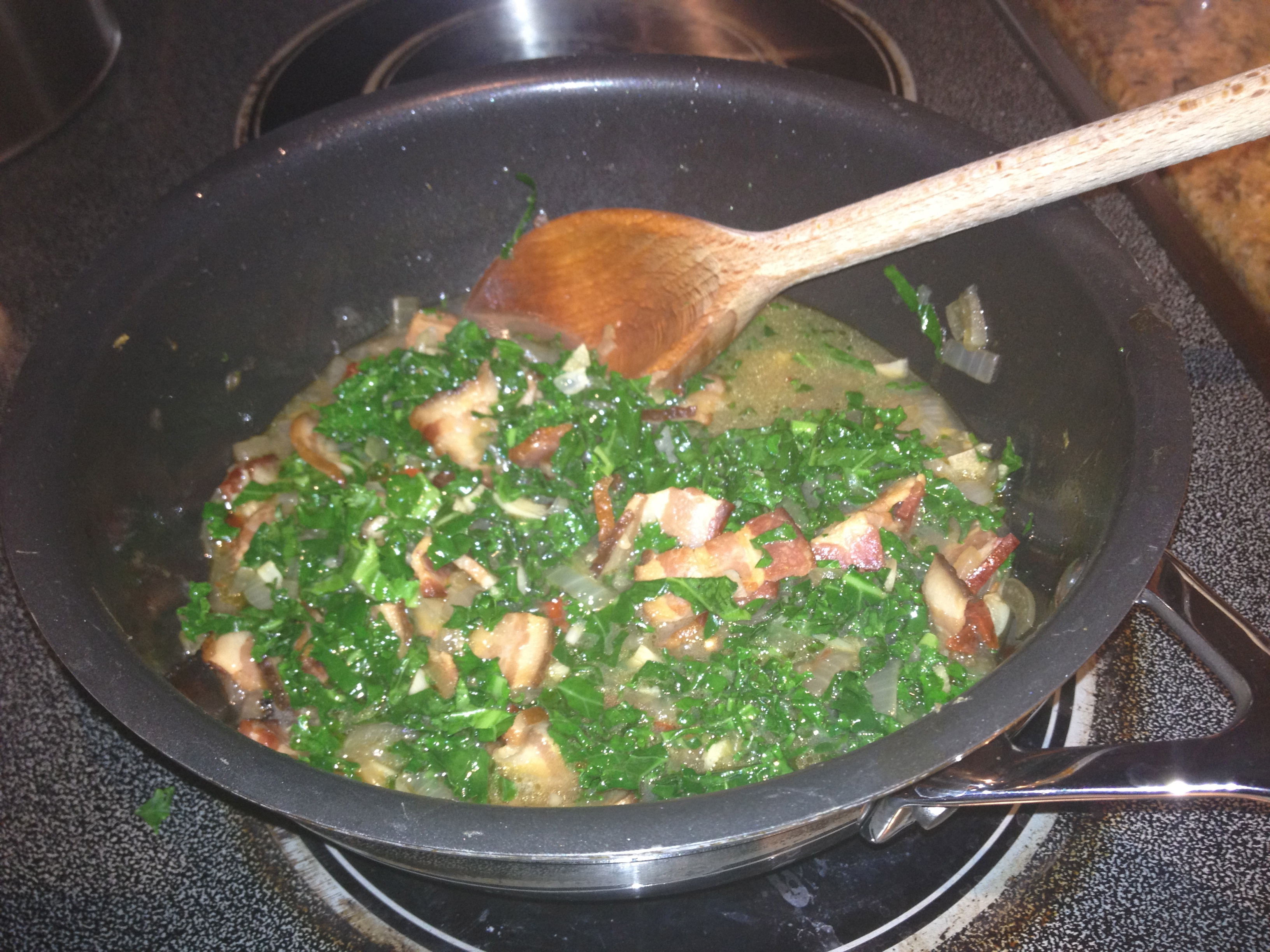
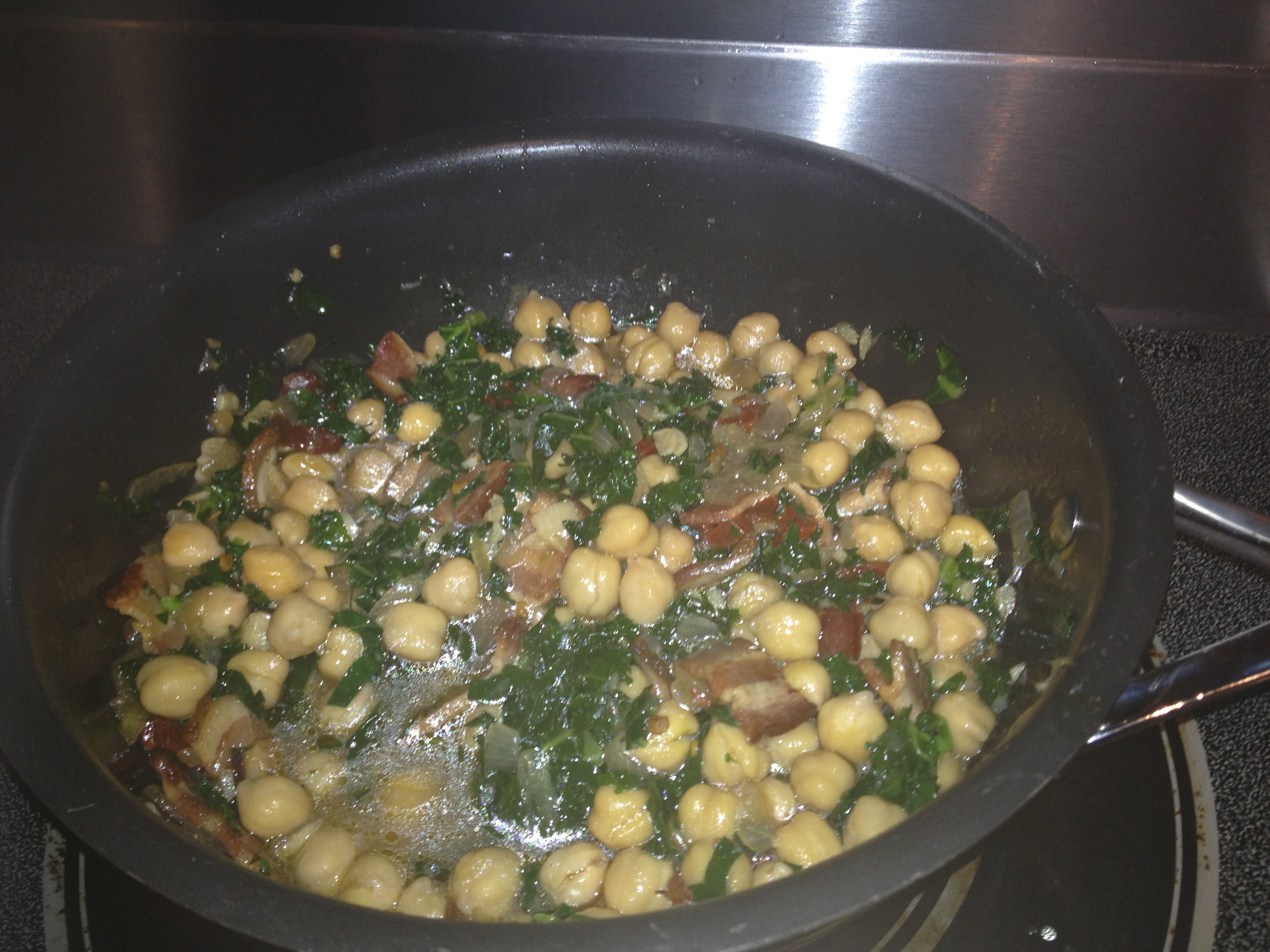
Add the chopped kale and reduce by another third. Add the chickpeas, simmer for about 7 or 8 minutes and set aside. If you’re serving this as a side dish you can stop reading now, you’re done.
Prepare the clams

Warm the oil in a lidded pot big enough to easily accommodate the clams without crowding them. Add your shallots and garlic, do not colour, you just want them soft. Add your wine (or stock) and bring to the boil. You don’t want the clams submerged in liquid so reduce until you have just enough to create a good, steamy pot – the liquid should be no more than about 1/2cm deep. Add the clams and steam until they open, removing the open ones from the pot as you go – this shouldn’t take more than five minutes.
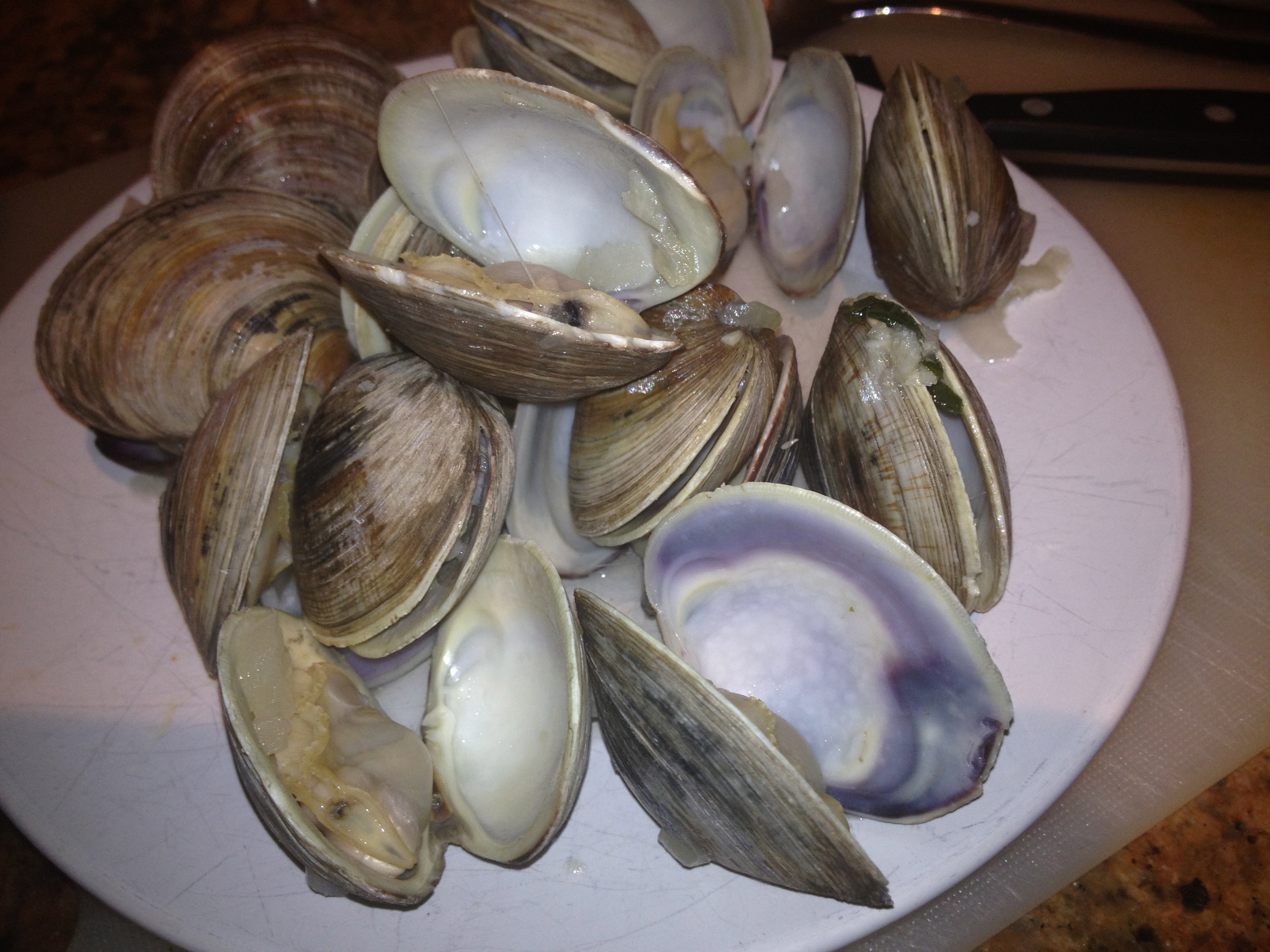
Return your chickpeas to the heat, add some (or all) of the clam liquor if you like, stir through the clams and serve.

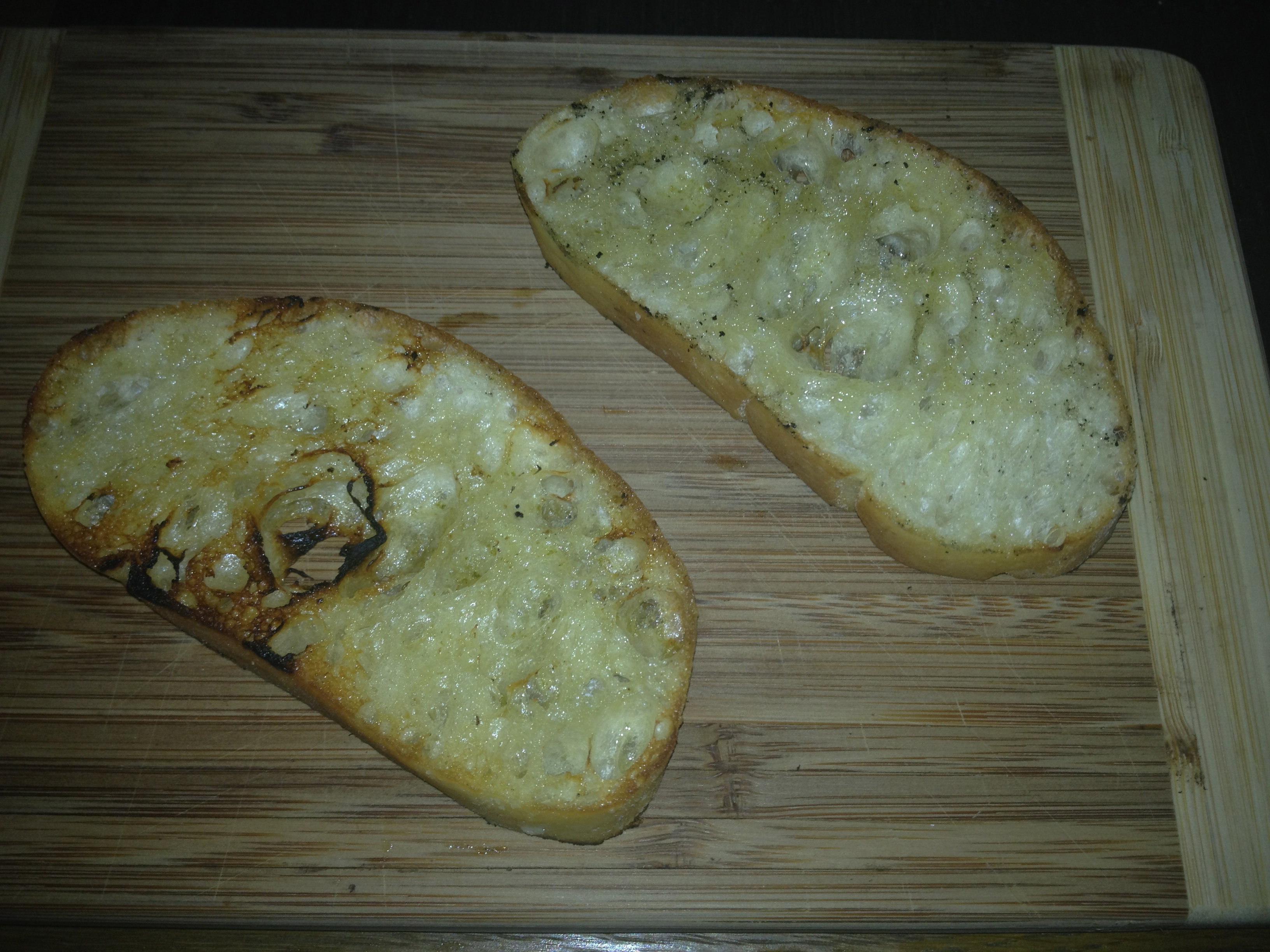
I served this with thick slices of ciabatta, rubbed with a clove of garlic, drizzled with olive oil and grilled on the bbq.
 

Oh yes, fried pastry!

In planning and preparing a meal of eight courses for a birthday dinner (not my own) I really battled with the dessert course.

The theme was, loosely, Chinese. The preparation, endless. The decor, turquoise and white with many orchids and candles floating prettily in bowls of water. The courses, multiple. The cocktail, Jack Daniels Honey with iced tea and lemonade. The dessert, undecided until one of the last minutes.

I spent two days painstakingly stuffing and pleating pot stickers, making a masterful (if I say so myself) master stock, braising ribs to an unctuous hot and sour stickiness … I won’t bore you with more of the details, you get the picture.

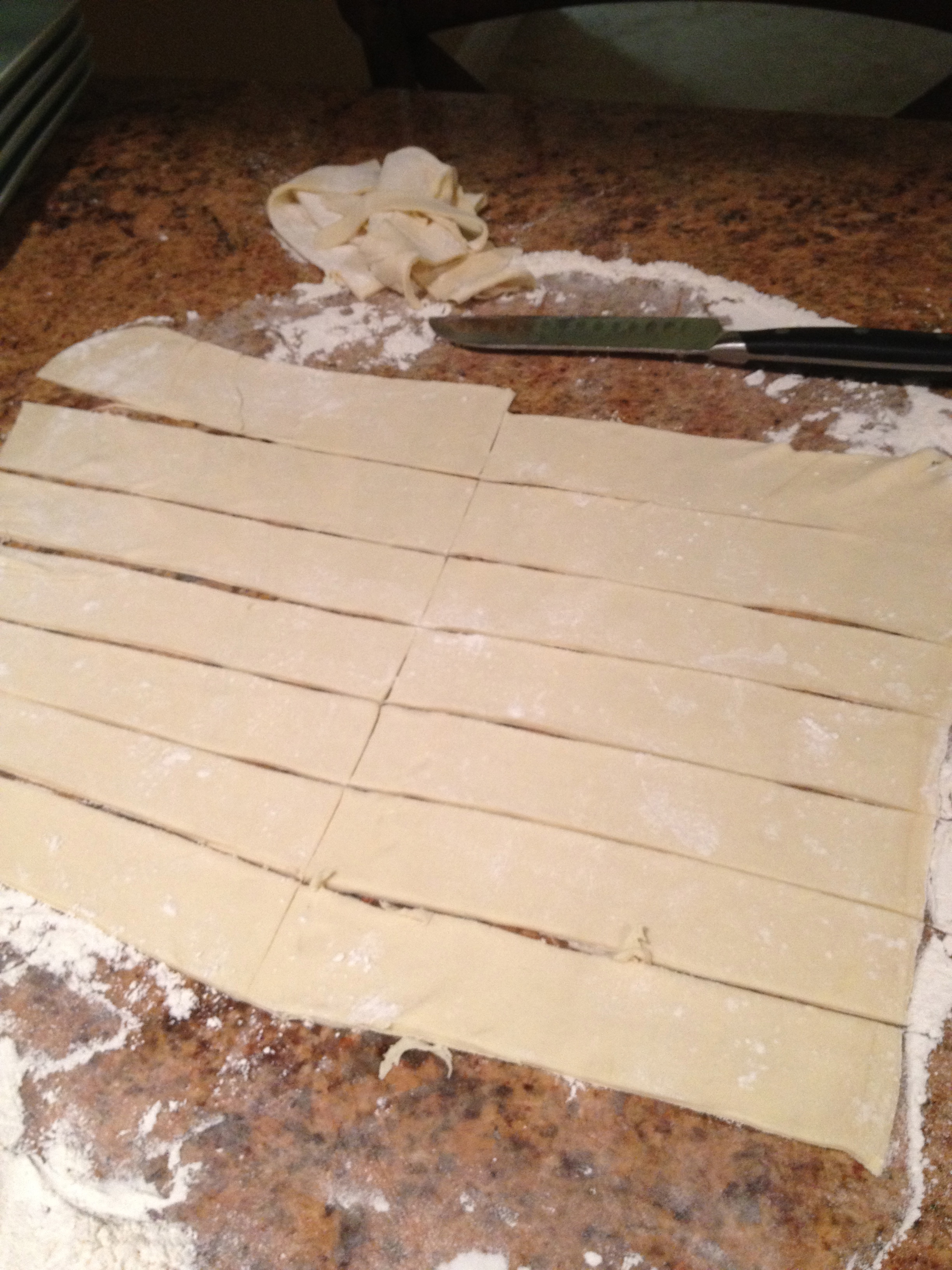
During all of this I waited and waited for dessert inspiration to come and it never did. Finally, in a moment of near desperation (minutes after that point in the evening when you’ve already served seven courses and timidly, and with absolutely no confidence, say “um, would anyone like dessert with their jasmine tea?”  And your guests stubbornly refuse to do the polite thing and say “no thanks, just tea for me.”) – I grabbed the puff pastry from the freezer, rolled it out, cut it into strips about 3 cm wide and dropped them into hot oil.

Roll and cut

Now, I’m pretty sure I’m not the first person in the world to fry pastry – the Italians have a dessert called cenci (rags of dough) made from a flour, egg, water, sugar pastry, fried in a similar fashion but doesn’t really puff up much – but in that moment, as I watched my silky, pale strips of pastry puff up into magnificent, golden tubes of awesome I felt like a pioneer. I felt like the first person in the world to fry puff pastry. If not, I wondered, why are we not all doing this all the time? Simple and delicious.

Try it, please.

  • Puff pastry – you can make your own, I didn’t
  • Clean oil of a fairly neutral variety with a high smoking point – I used Canola
  • Powdered sugar

Deep pot with about 4 cm or 5 cm of oil in it – heat to around 190 C. Be safe. Hot oil is dangerous.

Roll out pastry using as little flour on your rolling pin and work surface as possible.

Cut into strips about 3cm wide and 10cm long (although I think any size and shape will do).

Drop 3 or 4 into the oil at a time – don’t crowd the pan.

They take a minute or so to puff up and start to colour. Flip them over for a couple of seconds to make sure they colour all over.

Carefully remove with a slotted spoon and drain on kitchen paper.

Leave to cool for a few minutes then dust with powdered sugar.

Serve immediately.

Fried and sugared

There is nothing Chinese or even loosely Chinese about this dessert but it is delicious and surprisingly light – no need to serve with jasmine tea if that’s not what you’re having. They would also be good with an espresso, a liqueur or just on their own.

Note – I experimented with a variety of thicknesses, from paper-thin to about half a cm and found that the best ones were made from pastry about 3mm thick – they had a crispy exterior but maintained a bit of a chew in the middle.

What about the bay leaf?

I’ve been thinking about bay leaves – boring, I know. Please don’t stop reading, this is going somewhere.

In Jennifer Reese’s awesome Make The Bread, Buy The Butter (one of my favourite books of 2011) she has this to say about bay leaves, “If bay leaf didn’t exist, would anyone miss it? I’ve never tasted something and thought, This stew is just crying out for bay leaf. But I keep buying and using it nonetheless.” She’s right, of course. But I wanted her to be wrong. I love bay leaves. And bay trees.

I started searching online, it’s where all searches begin, really, and I found a lot of very dull “add to soup” type of advice. I also found the equally dull “they’re good if you add them to potatoes/chicken/ bouquet garni/ court-bouillon”, I even found “weave them into a wreath” (really, a wreath!) and my best “make potpourri” – do people really do that? Am I missing out here?

I turned to books and found that Larousse calls them “indispensable” but doesn’t say why and the brilliant Simon Hopkinson “thanks The Lord” for them. Every chef, it seems, loves a bay leaf.

After much fruitless Googling and page turning I remembered my Momofuku obsession of ’09 – the obsession actually started way before then but the fires of the obsession were stoked when David Chang committed some of his recipes to paper. Anyway, I remembered seeing a small, bay-focused recipe in those pages.

It’s so simple, pork fat infused with fresh bay then whipped into butter (with the help of some added melted butter) set in the fridge and then and served with homemade muffins. Sounds awesome, no?

So I tried it. Easy enough to do. I used the rendered fat from very smokey bacon, unsalted butter and about 10 bay leaves and was left with a little over a cup of beautiful, silky, bay leaf butter. But what next? There are only so many muffins a girl can eat… and I didn’t actually have any muffins and I was not about to make muffins.

I brushed it onto thick slices of ciabatta and toasted them on the bbq. Quite nice but was the ciabatta better for it? Not sure. Would I have missed the bay if I’d slathered the ciabatta in plain bacon butter and grilled it? Not sure about that either. (Also, toasted bacon butter bread! Now that might be something I could get onboard with – bit of a Paula Deen moment).

I gently seared scallops in it. Nice enough but not life changing. The delicate sweetness of the scallops actually benefitted more from the smokey bacon flavours than from the bay leaf.

I tried a bit of a wintery risotto with it. Again, nice enough but a bit ho hum.

I had a rack of pork from which my butcher had inexplicably removed the fat – seriously, who does that? Knowing it was not going to have the benefit of being cooked under a layer of gently melting pig fat I smothered it in a mixture of bay leaf butter and dijon mustard before roasting. It was okay. I noticed the bay leaf because I was looking for it but would I have missed it if it wasn’t there? I doubt it.

The result of the bay leaf experiment: awesome? No.

If you happen to have a glut of bay leaves hanging around the best I can suggest is … add them to potatoes/chicken/ bouquet garni/ court-bouillon or maybe weave them into a wreath or make some potpourri.

A London restaurant I worked at adorned its front entrance with gorgeous, eucalyptusy bay trees – the soft scent is so evocative to me that when I pass fresh bay trees in a nursery (or wherever) I instinctively check my pockets for pens and wine openers and square my shoulders for service. Maybe one never outgrows stuff like that? And maybe that’s the point of the bay.